How long does a 20 lb propane tank last? Use the BTU formula
How long does a 20 lb propane tank last? A full 20 lb fill runs a 30,000 BTU/h appliance for about 14 hours. Calculate it with: pounds of propane × 21,600 ÷ BTU/h. A 15 lb exchange fill lasts about 11 hours under the same conditions.
Part of our guide on propane tank sizes
Propane Facts
- Energy, 20 lb fill
- about 430,000 BTU
- Energy per pound
- about 21,600 BTU
- 15 lb exchange fill
- about 324,000 to 330,000 BTU
- 30,000 BTU/h appliance, 20 lb fill
- about 14.3 theoretical hours
- 9,000 BTU/h appliance, 20 lb fill
- about 47.8 theoretical hours
- Propane boiling point
- about -44 F
Contents10 sections
- How long does a 20 lb propane tank last?
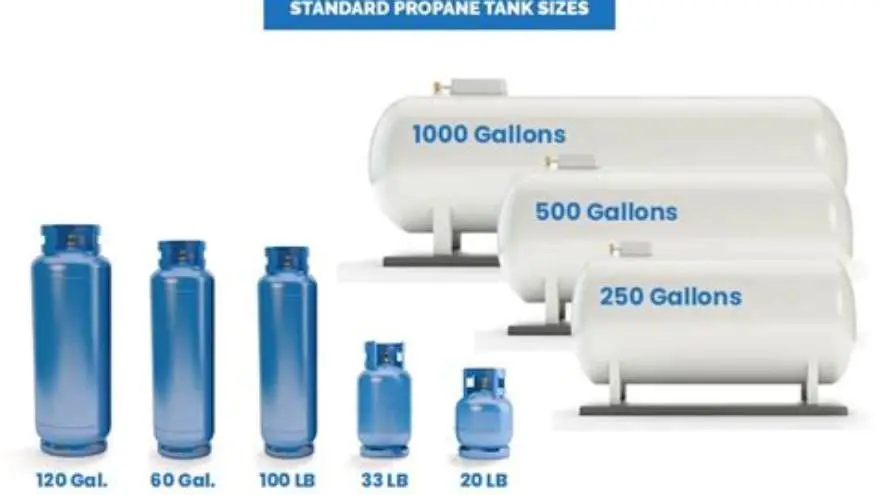
- How much propane does a 20 lb cylinder actually hold?
- Where do you find the appliance's BTU/h rating?
- How long will a 20 lb tank run common appliances?
- Why can actual runtime differ from the calculation?
- How can you measure the propane left in the cylinder?
- Are gauges and hot-water tests accurate?
- Can cold weather stop a high-demand appliance?
- Key points
- People also ask
How long does a 20 lb propane tank last?
A 20 lb propane fill contains about 430,000 BTU. Divide that number by your appliance's BTU/h input rating for a direct estimate. A 30,000 BTU/h appliance therefore runs for about 14.3 theoretical hours at its rated input.
Use the same calculation for a partial or exchange fill. Fifteen pounds contains about 324,000 BTU, so the same appliance runs for about 10.8 theoretical hours. Actual time can be longer or shorter because appliances cycle, settings change, and cold weather can limit vapor delivery.
Here is the short formula: propane pounds left × 21,600 ÷ appliance BTU/h = theoretical hours. For a full 20 lb fill, that becomes 20 × 21,600 ÷ your appliance's BTU/h.
How much propane does a 20 lb cylinder actually hold?
The 20 lb figure describes the nominal propane fill, not the cylinder's empty weight or water capacity. Propane provides roughly 21,600 BTU per pound, so 20 pounds provides about 432,000 BTU. Rounding to 430,000 keeps the estimate simple. If that sounds like your situation, read up on does a 1 lb propane tank last next.
The 80% rule concerns the cylinder's liquid volume. Propane expands as temperature rises, so the cylinder is filled to about 80% of its water capacity and keeps vapor space above the liquid. A nominal 20 lb fill is the amount of propane in that permitted fill, not simply 80% of 20 pounds.
Exchange cabinets often provide about 15 pounds instead of 20. The exact amount depends on the supplier and region, so read the exchange label or receipt. Fifteen pounds multiplied by 21,600 gives about 324,000 BTU.
Where do you find the appliance's BTU/h rating?
Appliance BTU/h is the fuel input consumed each hour at the stated rating. It is not the useful heat reaching your food, room or patio. Look for BTU/h, BTU/hr or an input line on the data plate and owner's manual. There is more on propane fire pit runtime in a separate guide.
Use the input figure when the label shows both input and output. Add the listed burner inputs if you run several burners together. Convert kilowatts by multiplying by 3,412.
Check the exact model manual when the rating is missing. A similar-looking appliance can have a different burner, regulator or fuel setting. Do not estimate from its physical size.
- Find the rating plate on the frame, cabinet, base or hose connection.
- Read the line marked
BTU/horBTU/hr. Choose input rather than output. - Add burner ratings only when you plan to operate those burners together.
- Convert a kilowatt rating by multiplying it by 3,412.
- Use the owner's manual if the plate is damaged or unclear.
How long will a 20 lb tank run common appliances?
These examples use the listed input rating and a full 20 lb fill. Replace each example rating with the number on your appliance. The results are theoretical hours at the appliance's rated input under normal conditions. People in this spot often ask about propane tank level as well.
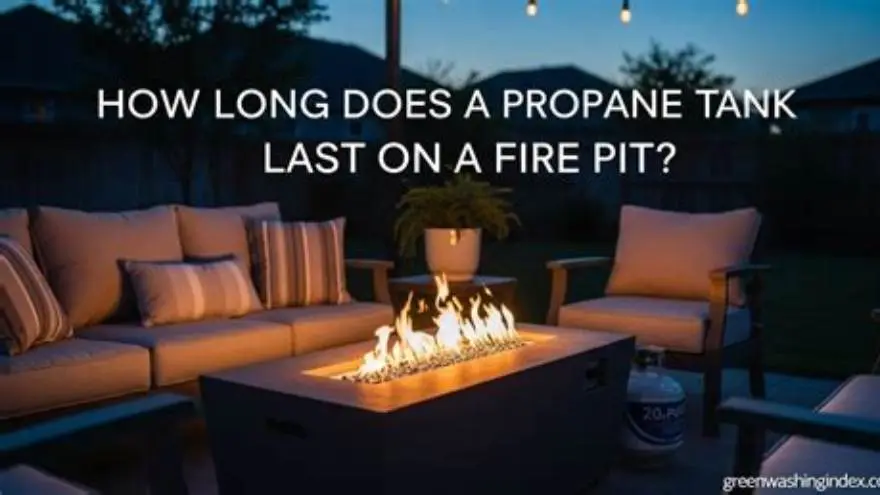
A 30,000 BTU/h grill gives about 14.3 hours. A 40,000 BTU/h patio heater gives about 10.8 hours. A 50,000 BTU/h fire pit gives about 8.6 hours.
A 9,000 BTU/h heater gives about 47.8 hours, while one 10,000 BTU/h camp-stove burner gives about 43 hours. A 15 lb exchange fill reduces each result by about one quarter.
A burner that cycles or runs below its rated input uses less fuel over time. A regulator, hose or cylinder that cannot supply the required vapor rate can reduce performance instead of simply shortening the calculation. We go through propane furnace efficiency step by step elsewhere on the site.
| Appliance example | Rating, BTU/h | 20 lb fill, 430,000 BTU | 15 lb fill, 330,000 BTU |
|---|---|---|---|
| Gas grill, all burners high | 30,000 | 14.3 h | 11 h |
| Fire pit burner | 50,000 | 8.6 h | 6.6 h |
| Patio heater | 40,000 | 10.8 h | 8.3 h |
| Small portable heater | 9,000 | 47.8 h | 36.7 h |
| One camp-stove burner | 10,000 | 43 h | 33 h |
Why can actual runtime differ from the calculation?
The calculation uses the appliance's full input rate. Your appliance may run below that rate, cycle off, or use only part of its burner capacity. Appliance design, regulator limits, hose size, temperature and wind can change the result.
A grill rated at 30,000 BTU/h does not consume that amount when only two burners operate at a low setting. The actual average draw must be measured or estimated from the settings you use. A thermostat-controlled heater can cycle on and off, so its average input is lower than its nameplate rating.
Use an average draw when you know the duty cycle. For example, a 9,000 BTU/h heater operating 40% of the time averages 3,600 BTU/h. A 20 lb fill would then provide about 430,000 ÷ 3,600, or 119 theoretical hours. The 40% figure is only an example, not a promise for your room or weather. We go through propane tanks only get filled step by step elsewhere on the site.
Track fuel use for your own setup if the estimate matters. Weigh the cylinder before and after a known period, then divide the pounds used by the hours operated. Multiply pounds per hour by 21,600 to estimate your actual average BTU/h.
How can you measure the propane left in the cylinder?
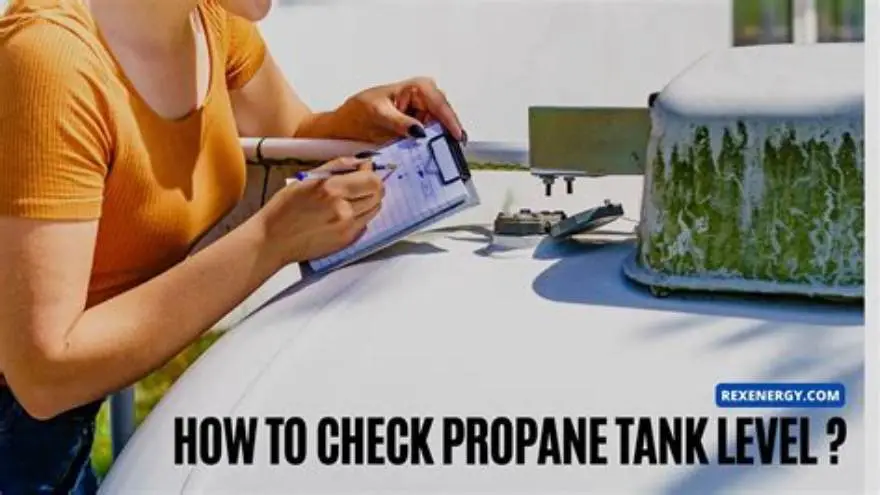
A scale gives you the remaining fuel in pounds. Use a scale rated to safely support the cylinder's full weight and with enough resolution to show a useful change in fuel level. The scale does not need a particular brand or unsupported precision.
Find TW on the collar. This is the empty-cylinder tare weight. Do not use WC, which refers to water capacity. Close the valve, disconnect the cylinder safely, and weigh it on a stable surface. People in this spot often ask about propane tank recertification as well.
Subtract TW from the scale reading. Multiply the remaining pounds by 21,600, then divide by your appliance's BTU/h rating. A cylinder weighing 28.5 pounds with a TW of 17.0 pounds contains about 11.5 pounds of propane. That equals roughly 248,000 BTU, or 8.3 theoretical hours for a 30,000 BTU/h appliance.
- Check the cylinder collar for the stamped TW value.
- Close the valve and disconnect the cylinder from the appliance.
- Place the cylinder on a scale rated for its full weight.
- Subtract TW from the total scale reading.
- Multiply the propane pounds by 21,600 and divide by appliance BTU/h.
Are gauges and hot-water tests accurate?
A pressure gauge does not show the amount of liquid propane until the cylinder is nearly empty. Pressure changes with temperature, so a cold cylinder can read low while holding plenty of fuel.
A warm-water test only gives a rough liquid line. Pour warm tap water down the side, feel for a temperature change, and avoid boiling water or flames. Surface strips have similar limits. Weigh the cylinder when you need pounds. It helps to understand propane tank ownership before going further.
Can cold weather stop a high-demand appliance?
Cold weather can reduce vapor delivery even when propane remains in the cylinder. Propane boils at about -44 F, but vaporization still needs heat from the liquid, cylinder and surrounding air. A high-demand appliance can outdraw a 20 lb cylinder in cold weather.
The limit depends on air temperature, liquid level, cylinder size, appliance demand and regulator design. Frost, a shrinking flame or an appliance that will not stay lit can indicate insufficient vapor delivery. Do not assume the cylinder is empty.
Check the cylinder and appliance manuals for vaporization tables or minimum temperature ratings. Follow those limits for the exact cylinder, fill level and appliance. Turn down the appliance only if the manual permits it, and ask the supplier about a larger cylinder or approved two-cylinder setup when demand stays high.
Never warm a cylinder with a flame, torch or heat gun. Heat raises internal pressure and can open the relief valve. If you smell gas, leave the area, avoid flames and electrical switches, and call the supplier or emergency services from outside.
Key points
- Use pounds of propane left × 21,600 ÷ appliance BTU/h for a quick estimate.
- Appliance BTU/h is its fuel input rate, not its delivered heat. Cycling and settings change the average draw.
- A nominal 20 lb fill is a fuel amount. The cylinder's 80% limit concerns liquid volume and expansion space.
- Weigh the cylinder, subtract its stamped TW tare weight, and use the remaining pounds in your calculation.
- A high-demand appliance can outdraw a 20 lb cylinder in cold weather. Check both manuals for vaporization limits.
People also ask
Can one 20 lb tank run a 50,000 BTU fire pit in winter?
The arithmetic gives about 8.6 theoretical hours from a full 20 lb fill. Cold-weather vaporization may limit the fire pit sooner. Check the cylinder and appliance manuals for vaporization limits at your temperature and liquid level.
How many cookouts will a 20 lb tank cover?
Use your average input and cooking time. A grill averaging 15,000 BTU/h for two hours uses 30,000 BTU, so a 430,000 BTU fill gives about 14 such sessions. Your burners, settings and cooking time can change that result.
Why does my dial gauge read low when the tank still feels heavy?
Pressure follows temperature more than fuel quantity. Weigh the cylinder and subtract the stamped TW value before deciding it is empty.
Is a refill better value than an exchange?
Compare the price per pound. A refill station charges for the propane added, while an exchange may provide about 15 pounds. Read the label and divide each receipt by the pounds supplied.