Propane tank lease vs own: break-even and lock-in costs
Propane tank lease vs own depends on your yearly gallons. Divide the tank’s purchase price by annual leasing costs, including the rental fee and any per-gallon premium. Heavy users can break even sooner. Light users may never recover the purchase price.

Part of our guide on propane tank sizes
Propane Facts
- Full 500 gal tank
- about 400 gal at 80% fill
- Low-use payback (example)
- 10 years at 200 gal/yr
- High-use payback (example)
- about 3.6 years at 900 gal/yr
- Buried-tank payback (example)
- about 11 years at 900 gal/yr
- Gauge 20% to 80%
- 300 gal on a 500 gal tank
- 20 lb cylinders
- Not covered: exchange or refill is separate
Contents11 sections
- How do you work out your break-even point on a propane tank?
- Why do your yearly gallons change the answer?
- What does the supplier control when you lease the tank?
- Which lease terms should you read before you sign?
- Propane tank lease vs own: what does owning ask of you?
- Buying new or used
- Who inspects and requalifies it?
- Does a buried tank change the math?
- How do you switch suppliers or buy the tank you lease?
- Key points
- People also ask
How do you work out your break-even point on a propane tank?
Propane tank lease vs own is one division. Take the cost to buy and install the tank, then divide it by what leasing costs you extra each year. The result is the years until owning pays off. Live there longer than that and buying wins. Shorter, and leasing usually does.
Leasing's extra cost has two parts. One is the annual rental fee, if your supplier charges one. The other is the per-gallon premium: how much more you pay per gallon than an owner would. Both vary by supplier and state, so your own paperwork has to supply them.
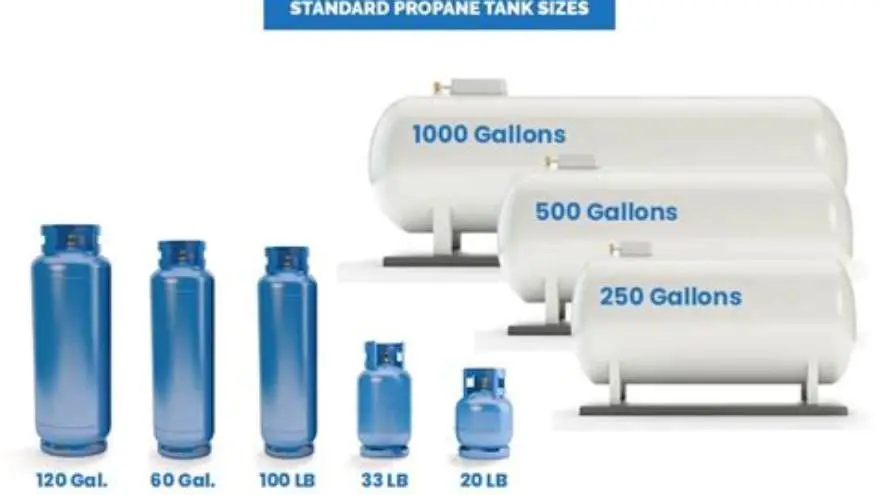
Cylinders don't belong in this math. 20 lb grill cylinders are bought outright, then exchanged or refilled, which is a separate decision. This page covers fixed home tanks, usually 120 to 1,000 gallons, filled by truck. Gather the four numbers below first.
- Get a written quote to buy the tank, including delivery, pad or burial, and a licensed installer's hookup.
- Find the rental fee on your lease or latest invoice.
- Work out the premium: your current price per gallon minus the price an owner would pay, from the supplier or a competing quote.
- Add up the gallons on your last 12 delivery invoices.
- Multiply premium by gallons, add the rental fee, then divide the tank cost by that total.
Why do your yearly gallons change the answer?
Rental is a flat yearly charge, but the premium grows with every gallon. A household burning 200 gallons barely feels it. One burning 900 feels it all winter. Here's a worked example with made-up round numbers, not current prices. For the detail, see our notes on how long does a 20 lb propane tank last.
Assume a 500-gallon above-ground tank costs $2,000 bought and installed, the rental fee is $100 a year, and the premium is $0.50 per gallon. Ignore upkeep for now. Full, that tank holds about 400 gallons at the 80% fill limit, so 900 gallons a year is just over two fills.
Low use first: 200 × $0.50 = $100, plus the $100 fee, is $200 a year. Divide $2,000 by $200 and you get 10 years. Expect to sell the house sooner and leasing is the safer pick.
High use next: 900 × $0.50 = $450, plus $100, is $550 a year. That makes $2,000 ÷ $550, or about 3.6 years. After that, owning saves roughly $550 a year before upkeep. If that sounds like your situation, read up on propane tank recertification next.
Premium moves the result more than the fee does. At $0.20, the 900-gallon house needs about 7 years. The math: 900 × $0.20 = $180, plus $100 is $280, and $2,000 ÷ $280 is 7.1. With no premium at all, the 200-gallon house waits 20 years. Pull 12 months of invoices rather than one cold winter, then rerun the math with your own figures.
| Measure | Low use | High use |
|---|---|---|
| Gallons per year | 200 | 900 |
| Rental fee | $100 | $100 |
| Premium at $0.50 a gallon | $100 | $450 |
| Extra cost of leasing per year | $200 | $550 |
| Payback on a $2,000 tank | 10 years | about 3.6 years |
What does the supplier control when you lease the tank?
Ownership is the whole story. Your leased tank belongs to the supplier, and their name is usually on its label or data plate. You own the fuel you buy, the piping in your house and your appliances. Walk outside and read the tank's label, then find the matching line in your lease.
A common belief is that paying rent lets you phone any company for a fill. It doesn't. In many states, a supplier can't fill a tank another company owns without the owner's consent, and most won't try. Rules differ by state, so ask your state's propane regulator or fire marshal's office. People in this spot often ask about underground propane tank as well.
Suppose another company fills it anyway. Trouble can follow. Your lease may charge a penalty, the owner may refuse further service, or the lease may end and the tank be collected. What's enforceable depends on your contract and your state, so don't test it in January.
Price is the other lever. With one company allowed to deliver, you pay its posted price, and you can't shop a fill without first changing the tank. Check whether the lease fixes or caps the price or leaves it to the supplier. Ask before you sign, or before you renew.
Which lease terms should you read before you sign?
Ask for the full lease in writing and take it home. Forms differ a lot, and some say very little. If the paper is thin, request the terms by email so you have a record. We cover about 21,600 BTU divided by burner BTU/hr in its own article.
Weigh the minimum purchase and the exit fees most. Minimums bite hardest in a mild winter, when you burn less than planned. Exit terms decide what leaving costs.
Leases usually put the tank and its fittings on the supplier, and the house piping and appliances on you. Wording varies. Confirm who answers when a regulator fails or a valve leaks.
- Rental fee: the yearly amount, whether buying a set number of gallons waives it, and whether it can rise mid-term.
- Minimum purchase: gallons you must buy per year, and the charge if you fall short.
- Term and renewal: how long it runs, and whether it renews on its own.
- Removal fee: the charge to pick up the tank, plus any early-termination fee.
- Inspection and repairs: who pays for leak checks, valves, regulators and tank damage.
- Price terms: fixed, capped, or simply the supplier's posted price.
Propane tank lease vs own: what does owning ask of you?
Owning moves every tank job onto you. That's the trade-off you accept for dropping the rental fee and premium: you hold the maintenance, the paperwork and any repair bill. The Tank Size Calculator on this site gives you a starting size, and size drives the purchase price. The other half of this decision is propane tank level.
- No rental fee
- Shop every fill
- Tank stays with you
- Upfront purchase and install
- You pay repairs
- Buried removal cost lands on you
Buying new or used
New tanks come stamped with an ASME code mark and a manufacture date. Used ones can cost less, but read the data plate, ask for proof of ownership, and look for another company's name on the tank. One that still belongs to a supplier isn't yours to sell. Suppliers may also refuse to fill a tank they haven't looked over.
Who inspects and requalifies it?
Requalification is the periodic retest that proves a cylinder is still safe. Each DOT cylinder, like a 20 lb grill tank, has a stamped date and a retest clock. Large ASME home tanks don't carry the same expiry, as far as I know. The filler still looks for dents, rust and valve damage, and can refuse to fill one. Local rules vary, so check with your installer or state regulator.
Installation means setting the tank, regulator and piping, then leak-testing them. That's licensed technician work, not a weekend job. NFPA 58 and local code set the distances from your house and property line. We go through do propane tanks expire step by step elsewhere on the site.
Does a buried tank change the math?
Yes, because burial raises the purchase side of the division. Say a buried tank costs $6,000 installed, as an example only. At the 900-gallon house's $550 yearly extra, $6,000 ÷ $550 is about 11 years. Buried tanks also need corrosion protection that someone must test, and removal or abandonment costs fall on the owner. Small above-ground tanks are cheaper to buy, easy to inspect and simpler to move. Before you buy a buried tank, get a written removal quote.
How do you switch suppliers or buy the tank you lease?
Switching starts with quotes, not a cancellation call. Ask two or three other suppliers for their per-gallon price and tank terms. Some may offer to cover part of the swap, so find out what they'd pay for.
Buying from your supplier typically means a quoted price, a signed bill of sale and a transfer of ownership. Get the serial number and data plate details written into the paperwork. After that you can shop every fill. Find out whether the supplier inspects the tank first.
Whoever owns the tank, a rotten-egg smell means leave the area. Use no switches, flames or phones inside. Shut the tank valve only if it's safe to, then call your supplier or 911 from outside. Stay out until a professional says it's safe. A plug-in propane alarm mounted low, per the maker's instructions, warns you sooner than your nose. Fit one before swap day.
- Read your lease for the notice period, removal fee and termination fee, and note the dates.
- Ask your current supplier for a written price to sell you the tank, plus what happens to the fuel left in it.
- Collect quotes from other suppliers, with their price for an owner and for a lessee.
- Compare three paths: buy your tank, let a new supplier install theirs, or stay. Run the break-even steps for each.
- Time the switch for when the gauge reads low, so less fuel is left to settle.
- Have a licensed technician do the swap and leak-test the system. Don't touch the valves or regulator yourself.
Own the tank if payback is shorter than your stay in the house. Lease if it isn't, or if you'd rather not carry repairs.
Key points
- Get the per-gallon premium in writing. It moves your payback more than the rental fee does.
- Pull 12 months of delivery invoices before doing any math. One cold winter misleads.
- Read the minimum purchase, renewal and removal terms before you sign or renew a lease.
- Never let a second company fill a leased tank without the owner's written consent.
- Ask for a written removal quote before buying a buried tank.
People also ask
Does buying the tank guarantee a lower price per gallon?
No. It lets you shop every delivery, but you still need quotes. Some suppliers add a small-delivery fee or a minimum, so compare the full price of a typical fill, not just the per-gallon figure.
What if my supplier won't sell me the tank?
Some decline. Then you can stay, or let a new supplier install its own tank and remove the old one under your lease's exit terms. Ask your state propane regulator or consumer office whether buyout rules apply where you live.
How do I find my yearly gallons without invoices?
Ask the supplier for your delivery history. Otherwise use the gauge. It reads percent of total volume, so a fill from 20% to 80% on a 500-gallon tank is 60% of 500, or 300 gallons.
Is leasing ever right for a heavy user?
Yes. Leasing makes sense if you'll move before payback, can't fund the upfront cost, have a buried tank with a long payback, or want the supplier to carry repairs. You accept a higher yearly cost for less risk.