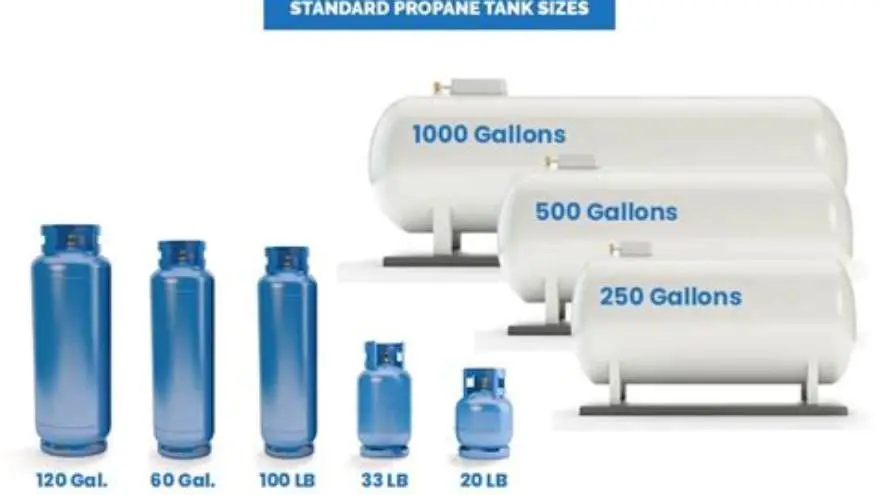
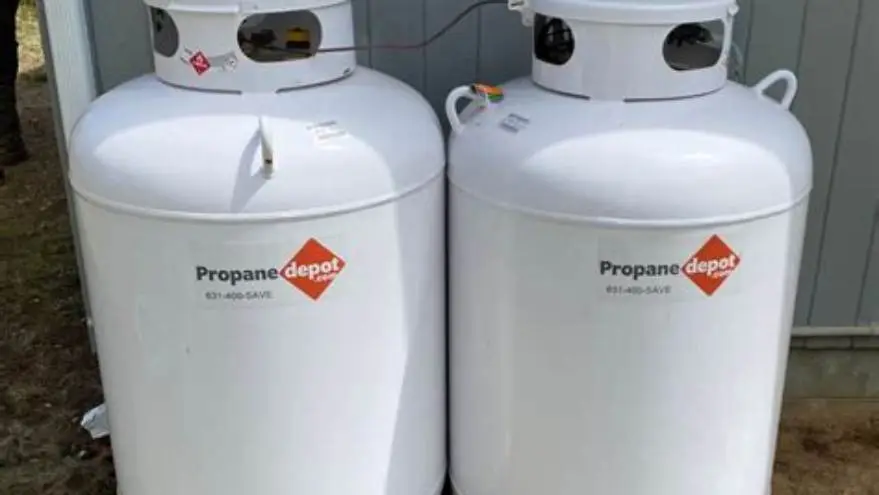
Do Propane Tanks Expire? Read the Collar Date Stamp
Do propane tanks expire? Propane doesn't have the cylinder's requalification deadline. A refillable DOT cylinder has an initial period set by federal rules, its specification and the approved requalification method. Check the markings and current requirements before filling it again.
Part of our guide on propane tank sizes
Propane Facts
- Gas shelf life
- Propane remains usable when stored safely
- Initial requalification
- Often 12 years, depending on the cylinder rules
- Later interval
- Depends on the approved requalification method
- Date format on collar
- Usually month and year, such as 06 15
- 20 lb cylinder holds
- About 4.7 gallons when filled to its rated limit
- Fixed ASME tanks
- Different inspection and maintenance rules
Contents11 sections
- Do propane tanks expire, or does the gas?
- Where is the date stamp on a propane cylinder, and how do you read it?
- How do the manufacture and requalification dates set the deadline?
- What do refill stations and exchange cages do with an older cylinder?
- Is requalifying a cylinder worth it, or should you retire it?
- Which damage retires a cylinder regardless of the date?
- How are big ASME tanks checked, and where does a retired cylinder go?
- Do ASME tanks follow the portable-cylinder date rule?
- Where does an expired cylinder go?
- Key points
- People also ask
Do propane tanks expire, or does the gas?
Propane doesn't spoil inside a sound, properly stored cylinder. A cylinder kept for years can still contain usable fuel. A weak grill flame usually points to the regulator, cold weather, a low fill or an appliance problem.
The cylinder is the part with a service deadline. Knocks, corrosion and valve wear can weaken it, so federal rules require certain refillable cylinders to be requalified. Odorant may become less noticeable in some conditions, so never rely on smell alone to judge safety.
The rule depends on the container. Portable refillable cylinders usually follow US Department of Transportation specifications. Large fixed tanks usually follow the ASME pressure-vessel code and have different inspection requirements.
Disposable one-pound camping cylinders aren't refillable. Use them as directed, then follow local disposal or recycling instructions. Never refill a disposable cylinder or connect one to equipment outside its instructions. We go through cylinder date or ASME tank step by step elsewhere on the site.
A date does not make damaged steel safe. Stop using a cylinder with a leak, deep corrosion, a severe dent or valve damage. Move away from ignition sources and contact your propane supplier from a safe location.
Where is the date stamp on a propane cylinder, and how do you read it?
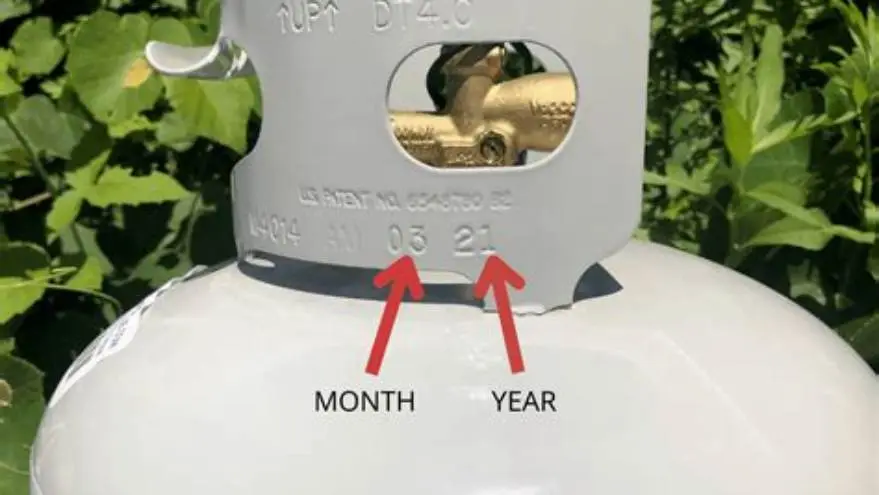
Look at the collar, the round steel guard around the valve. The markings are usually pressed into its top or outer face. Wipe away grime and use a flashlight at a low angle so the marks cast shadows.
A date often appears as a month and year, such as 06 15. That example means June 2015. Other markings identify the cylinder specification, tare weight and water capacity. Before you commit to anything, it is worth looking at propane tanks only get filled problems.
Paint condition does not establish manufacture date. Repainting, scratches and fading tell you little about when the cylinder was made. Read the metal stamp instead.
Write down the tare weight marked TW. Weigh the cylinder, subtract the tare weight, and divide the propane weight by about 4.24 to estimate gallons. Never exceed the cylinder's rated fill limit.
- Wipe the collar clean and shine a light across it.
- Find the manufacture month and year.
- Look for a later requalification marking and any method code.
- Record both dates, along with the cylinder specification.
- Ask a propane dealer to inspect an unreadable or confusing stamp.
| Stamp | Example | What it tells you |
|---|---|---|
| Specification | DOT 4BA240 | Cylinder type and pressure rating. Not a date. |
| Manufacture date | 06 15 | Month and year the cylinder was made. |
| Tare weight | TW 17.0 | Empty cylinder weight in pounds. |
| Water capacity | WC 47.6 | Water capacity used for cylinder sizing. |
| Requalification mark | 09 27 plus a shop ID | A later inspection marking from an authorized facility. |
How do the manufacture and requalification dates set the deadline?
The original manufacture date starts the applicable qualification period. For many common portable DOT cylinders, the initial period is 12 years. That period does not apply to every propane tank or cylinder. Check the cylinder specification, markings and current federal rules. It helps to understand does a 1 lb propane tank last before going further.
The main federal rules appear in 49 CFR § 180.205 and its requalification provisions. The interval tables in 49 CFR § 180.209 cover later periods for listed cylinder specifications and approved methods. Read the current text at [eCFR](https://www.ecfr.gov/current/title-49/subtitle-B/chapter-I/subchapter-C/part-180).
A later requalification mark does not erase the manufacture date. It records an authorized inspection or test. The approved method and cylinder specification determine how long that qualification remains valid.
Visual requalification and volumetric testing can have different intervals. The exact marking format also depends on the authorized method. Do not infer your deadline from an example stamp or another cylinder. An authorized requalifier must verify the cylinder, method and required marking. People in this spot often ask about how long does a 20 lb propane tank last as well.
Ask the shop to state the next due date in writing. A cylinder made in June 2015 could reach its initial deadline in June 2027 if its applicable rule uses 12 years. If a shop requalifies it earlier, use the approved later interval for that recorded method.
The due date and filling acceptance are separate questions. A cylinder can be eligible under federal rules yet refused by a supplier because its marking is unclear, its condition is poor or its intake policy is stricter. A facility may have its own intake policy in addition to federal eligibility requirements; ask before transporting the cylinder.
What do refill stations and exchange cages do with an older cylinder?
Refillers commonly check the cylinder date before filling, but practices vary by facility. Some inspect every cylinder closely, while others may have different intake procedures. Call ahead if the marking is old, damaged or difficult to read. If that sounds like your situation, read up on tank rental cost comparison next.
A cylinder outside its applicable qualification period may be refused. An attendant cannot make an expired or damaged cylinder acceptable by overlooking the stamp. A cylinder that was filled once without a careful check is not proof it remains eligible.
Exchange cages follow store and supplier policies. One location may accept an older cylinder, while another may refuse it or direct you to a dealer. Ask before loading it into your vehicle.
Read the replacement collar before paying. A cylinder near its next deadline may have little qualification time left, even if the exchange store accepts it. Buying a new cylinder gives you a new cylinder, but it does not prove the date is recent. Verify its manufacture date before purchase.
- Refill station: practices vary. Ask whether it fills older cylinders or refers them for requalification.
- Exchange cage: acceptance policies vary by brand, supplier and store.
- Propane dealer: often the best source for interpreting an old or damaged marking.
Is requalifying a cylinder worth it, or should you retire it?
An authorized requalifier inspects the cylinder and applies the required marking for the approved method. Some propane dealers and cylinder shops offer this service, while others don't. Prices depend on size, location and test method, so ask local shops for current quotes.
For a 20 lb cylinder, compare local requalification costs with exchange or replacement options. Check the total cost, transport requirements and time without the cylinder. An exchange policy doesn't prove the cylinder is unsafe, and a current date doesn't guarantee acceptance.
A larger cylinder may justify a requalification quote when replacement costs more. Retire any cylinder with serious corrosion, deformation, heat damage or valve damage. A valid date cannot make unsafe steel acceptable.
Ask before transporting the cylinder. Confirm the facility accepts your specification and uses an authorized requalification method. Keep the receipt or written marking details.
| Option | Best for | Main catch |
|---|---|---|
| Requalify | A suitable cylinder in good condition | An authorized facility must confirm the specification and method |
| Exchange | A cylinder accepted by a local supplier | Acceptance depends on the supplier's policy and inspection |
| Buy new | Owners who want a replacement | Verify the manufacture date and required markings |
| Retire | Damaged or badly corroded cylinders | Local disposal rules apply |
Which damage retires a cylinder regardless of the date?
A current date doesn't save damaged steel. Stop using a cylinder with serious corrosion, deformation, heat damage or a damaged valve. Ask a propane dealer or qualified service provider about safe handling.
Use a non-corrosive leak-detection solution rated for LP-gas fittings after connecting an in-date cylinder. Bubbles indicate a leak. Never test with a flame.
Don't scrape, repaint or repair questionable steel before inspection. Those actions can hide damage or interfere with required markings. Leave the cylinder identification visible for the qualified provider.
- Deep rust: flaking scale or pits you can catch with a fingernail are warning signs.
- Dents, gouges and bulges: retire a bulge or a dent with a sharp crease.
- Fire or heat damage: blistered paint or discolored steel needs professional assessment.
- Bent collar or foot ring: damage can reduce protection or stability.
- Damaged valve: leaks, a stiff handwheel or a missing required device need professional attention. Overfill-prevention requirements depend on the cylinder and applicable federal effective dates.
How are big ASME tanks checked, and where does a retired cylinder go?
Do ASME tanks follow the portable-cylinder date rule?
No. Stationary tanks and many permanently mounted RV tanks are built to the ASME code. They use a nameplate and follow different inspection, maintenance and service requirements. A nameplate's manufacture year is not automatically a portable-cylinder requalification deadline.
Condition checks can involve the owner, supplier, manufacturer instructions and applicable local codes. Depending on the arrangement, checks may cover corrosion, coating, dents, valves, gauges, regulators and relief devices. Don't assume a supplier inspects every fixed tank at every fill.
If the supplier owns the tank, contact that supplier about its inspection program. If you own it, follow the manufacturer instructions and local code requirements. Removable RV cylinders are different. Their collar markings identify them as DOT cylinders.
Where does an expired cylinder go?
Don't put a cylinder in household trash, cut it, puncture it or vent it. An apparently empty cylinder can still contain vapor. Contact a propane dealer, exchange provider or your county household hazardous-waste program before transport.
Federal transportation and cylinder rules are separate from local disposal policies. Your county, waste contractor or facility can set acceptance limits, appointment requirements and preparation instructions. Call first.
Single-use one-pound cylinders follow local recycling or hazardous-waste instructions. Carry any accepted cylinder upright, secure it, close the valve and keep it out of a hot vehicle.
Key points
- Read the collar for the manufacture date and any later requalification mark. A number tagged TW or LB is weight, not a date.
- Refillers commonly check the date, but practices vary by facility. Call before bringing an older cylinder.
- A cylinder near or past its deadline may have little qualification time left. Check the markings before exchanging or buying it.
- Deep rust pits, bulges, a bent collar or a damaged valve can end a cylinder's life regardless of its date.
- Large fixed ASME tanks follow different inspection requirements. They don't use the portable-cylinder date rule.
People also ask
Can I keep using a cylinder after its qualification period if I never refill it?
The qualification rules focus on filling, transport and cylinder condition. An older cylinder still deserves inspection for rust, dents, heat damage and valve problems. Ask a propane dealer how to handle the remaining gas safely, then exchange or dispose of the cylinder through an accepted program.
Does the qualification period start when I buy the cylinder?
No. The initial period uses the manufacture date and the applicable cylinder rules. A cylinder can sit on a store shelf for some time, so read its collar before paying.
What if the stamp is too worn to read?
Treat it as unreadable until an authorized dealer or requalifier identifies it. A facility may refuse a cylinder whose date or specification cannot be verified. Don't guess from the paint or appearance.
Is a requalified cylinder as good as a new one?
It passed an authorized inspection for the interval allowed by its specification and test method. It is still older steel, so corrosion, dents, valve wear and storage history matter.
Does my RV's propane tank have an expiry date?
It depends on the tank type. Removable DOT cylinders use collar markings and requalification rules. A fixed ASME tank follows different requirements involving the owner, supplier, manufacturer and applicable code.