Underground propane tank vs above ground: when burying is worth it
For an underground propane tank vs above ground comparison, above ground suits most homes. An underground installation adds excavation and corrosion-protection work, so get written quotes for both choices. Burying makes sense when an HOA bans visible tanks, vehicle impact is a concern, or the lot offers a better fill-port location.

Part of our guide on usable gallons and burn hours for each
Propane Facts
- Illustrative burial premium
- In typical soil for a 500-gallon installation, burial might add roughly $1,000-$3,000. Get a written local quote.
- Common residential sizes
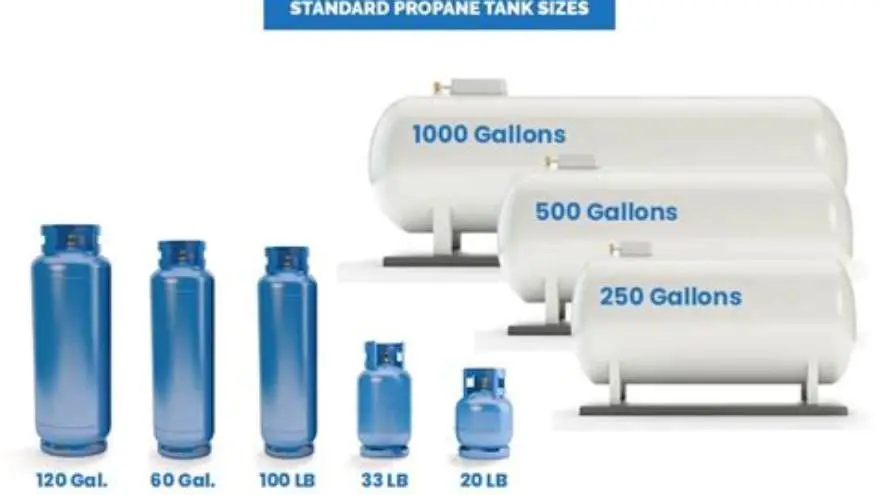
- 250, 500, or 1,000 gallons
- Setbacks
- Depend on tank size, installation type, code edition, and local rules
- Delivery hose reach
- Ask your supplier for the exact hose length on the truck serving your property
- Corrosion inspection
- Use the supplier's written schedule and responsibility terms
- Tank fill limit
- Usually 80% of the tank's water capacity
Contents8 sections
- Underground propane tank vs above ground: which option fits your lot?
- How close can each propane tank sit to the house?
- Which lot conditions make burial a poor choice?
- How far can the delivery truck reach?
- How often does a buried tank need corrosion checks?
- What permits, ownership terms, and HOA rules should you check?
- Key points
- People also ask
Underground propane tank vs above ground: which option fits your lot?
Above-ground installation usually requires a pad, tank, service line, and approved connections. It gives you a visible gauge and direct access for inspection. Above-ground work is usually less expensive because it avoids excavation and burial-rated tank costs; your supplier's written quote will show the actual difference.
Here is a clearly labeled example, not a guaranteed price. In typical soil, a 500-gallon installation in a region with ordinary excavation access might add roughly $1,000-$3,000 for burial. Rock, limited access, deeper excavation, and local labor rates can change the figure. Ask for separate written quotes before choosing.
Burial hides the tank and can reduce vehicle-impact exposure. It also puts the tank, coating, anode, fill equipment, and service lines out of easy reach. A buried tank can be a good fit for an HOA-restricted property, but appearance alone rarely justifies the added work.
Service life depends on coating quality, soil chemistry, drainage, corrosion protection, and inspection. An above-ground steel tank can remain serviceable for decades with proper care. A buried tank can also last for decades, but coating damage or neglected cathodic protection can shorten its life. Ask the supplier for the tank manufacturer's expected service life and replacement criteria.
| Factor | Above Ground | Buried |
|---|---|---|
| Install price | Usually the lower-cost option | Illustrative 500-gallon, typical-soil premium: roughly $1,000-$3,000; request a written quote |
| Gauge access | Visible and easy to check | Inside a ground-level dome |
| Corrosion exposure | Weather and surface rust | Soil moisture, chemistry, and water movement |
| Appearance | Visible from the yard or street | Mostly hidden below grade |
| Vehicle impact | Needs protection from traffic | Tank body has more protection, but the dome remains exposed |
| Expected service life | Depends on maintenance and tank condition | Depends heavily on coating, anode protection, soil, and inspections |
| Replacement work | Usually accessible from the surface | Can require excavation and removal work |
- visible gauge
- easier inspection
- usually simpler replacement
- delivery driver can see the tank
- visible from the street or yard
- exposed to weather and vehicle impact
- some HOAs restrict it
How close can each propane tank sit to the house?
Setbacks control the distance between a tank and buildings, openings, property lines, ignition sources, and other features. The required distance depends on tank capacity, installation type, local code, and the code edition adopted in your area.
NFPA 58 provides a reference framework, but your local authority having jurisdiction, or AHJ, enforces the rule. Do not place a tank from figures in an article. Call the building or fire department, give them the tank capacity and address, and ask for the current setback table or permit checklist.
Ask the supplier to mark the proposed tank and fill-port locations on a site plan. Submit that plan with the permit application if your jurisdiction requires one. Keep the approved plan because it records the placement accepted by the AHJ.
Burial can change which distances apply, but it does not remove setback requirements. The dome, fill connection, vents, and service line still need approved placement.
Which lot conditions make burial a poor choice?
Water is a serious concern for buried tanks. A high water table can create buoyancy, especially when the tank is nearly empty. Floodwater can also move soil around the tank and stress connected piping. Ask the installer how they assess water levels and what anchoring method the local rules require.
Rock can make excavation slow and expensive. Have the installer inspect or probe the proposed location before you accept a burial quote. A narrow gate, overhead wire, steep slope, or soft ground can also prevent excavation equipment from reaching the site.
Check your address on the FEMA flood map, then ask the AHJ whether local flood rules apply. The map does not replace a site assessment. Your supplier should confirm whether it will install a buried tank under those conditions.
Mark underground utilities before any digging. The installer should arrange the required utility-locate service and confirm where existing lines run.
- High water table: request a site assessment and anchoring plan
- Flood-prone property: check the FEMA map and local flood requirements
- Rock or ledge: ask for a probe or excavation review before accepting a quote
- Tight access: measure the gate, path, slope, and overhead clearance
How far can the delivery truck reach?
Hose length varies by supplier and truck. Ask your propane supplier for the exact hose length their delivery trucks carry before placing the fill port. Give the supplier a sketch showing the truck parking area, driveway, fill dome, and any gates or slopes.
The truck must reach the fill connection safely. A buried tank can place the dome near the driveway while the tank sits farther away, but the proposed piping and dome still need approval. Winter snow, locked gates, soft shoulders, and parked vehicles can make a technically reachable port unusable.
Walk the delivery route with the driver or supplier before installation. Mark the parking position and measure the distance to the proposed fill port. That measurement is more useful than a general hose estimate.
How often does a buried tank need corrosion checks?
A buried steel tank needs an approved coating and a corrosion-control system. Many systems use a sacrificial magnesium anode, which corrodes before the tank steel. Soil resistance, moisture, coating condition, and installation details affect how long the anode lasts.
There is no single inspection interval for every property. Use the tank maker's instructions, the supplier's written program, and local requirements. As an example only, a supplier might schedule a visual dome check annually and a cathodic-protection test at an interval it sets for the soil and system. Ask for the actual schedule in writing.
Ask who pays for testing, anode replacement, coating repairs, excavation, and tank replacement. Lease terms often assign these duties to the supplier, while an owner may carry them directly. The contract controls.
Request the corrosion-protection specification before installation. Keep the inspection reports with the permit and tank records.
What permits, ownership terms, and HOA rules should you check?
Call the local building or fire department before requesting final installation. Ask which office issues the permit, whether a plot plan is required, what setbacks apply, and whether an inspection occurs before backfill. Give the office your address, tank capacity, and proposed burial method.
Ask the supplier to identify the AHJ and provide the permit number before work starts. Compare the approved site plan with the marked location before excavation. Keep the permit, inspection approval, tank model, coating details, and ownership agreement.
HOA rules can prohibit visible tanks or restrict fill-port locations. Request the exact rule in writing from the HOA. Do not rely on a verbal approval.
Ownership affects future bills. A supplier-owned tank may include maintenance under a lease, while an owner-purchased tank leaves inspection and repair costs with you. Read the transfer, removal, and end-of-service terms.
- Ask the supplier for written quotes for above-ground and buried installation.
- Call the AHJ with your address, tank size, and proposed site plan.
- Request the HOA fuel-storage rule in writing.
- Walk the delivery route and measure the proposed fill-port distance.
- Get the corrosion schedule, service-life information, and responsibility terms in writing.
- Keep the permit number and approved plan before work begins.
- hidden from view
- can satisfy some HOA rules
- less exposure to vehicle impact
- excavation and added installation work
- corrosion protection needs documentation
- harder gauge access
- poor fit for some wet or rocky lots
Above ground suits most properties. Choose burial when site rules, appearance, or vehicle exposure justify the added installation and maintenance work.
Key points
- Above ground is simpler to inspect, service, and replace.
- Ask for a written comparison using your tank size, soil, access, and region.
- Buried tanks need approved coating and corrosion protection.
- High water, flooding, rock, and poor equipment access can rule out burial.
- Check local permits, setbacks, HOA rules, fill limits, and ownership before work starts.
People also ask
Can I switch from an above-ground tank to a buried one later?
Yes, but it requires a new installation plan, permit review, excavation, and approved tank and piping work. Ask for a written conversion quote before assuming the existing lines can remain.
Does a buried tank affect homeowners insurance?
Tell your insurer before the tank goes in. Requirements and any premium effect vary by insurer and policy, so get a written answer for your situation.
How full can a propane tank be?
Residential propane tanks are usually filled to 80% of their water capacity. The remaining space allows liquid propane to expand. Follow the supplier's gauge and delivery rules.
Is a buried tank safer during wildfire or vehicle impact?
Burial can reduce direct vehicle-impact risk and protect much of the tank from radiant heat. The dome, valves, and service lines remain exposed. The installation still needs code-compliant placement and protection.
What happens if a buried tank leaks?
Leave the area, avoid switches and flames, and call the supplier or 911 from outside. Do not re-enter until a qualified professional says it is safe. Locating and repairing a buried leak can require excavation.
What happens to a buried tank when I sell the house?
If you lease the tank, ask the supplier about transfer or removal. If you own the tank and the buyer does not want it, check your local AHJ or supplier about removal requirements before closing; in many jurisdictions the tank must be purged and removed by a licensed technician.