Propane furnace efficiency: what 80% vs 96% AFUE means
An 80% AFUE propane furnace turns about 80 of every 100 fuel-energy units into heat. A 96% model turns about 96 units into heat. Your fuel use still depends on the home's heating demand and the furnace installation.

Part of our guide on what rules each one out
Propane Facts
- 80% AFUE
- 80 useful units per 100
- 96% AFUE
- 96 useful units per 100
- Fuel saving
- About 16% versus 80%
- Propane energy
- About 91,500 BTU per gallon
- Rated scope
- Furnace, not whole house
Contents8 sections
- What does AFUE measure and what does it leave out?
- How much heat do 80% and 96% furnaces deliver?
- Why does actual propane use vary so much?
- Why does a higher AFUE rating not guarantee lower bills?
- How can you estimate fuel use from furnace output?
- Which propane furnace efficiency rating should you choose?
- Key points
- People also ask
What does AFUE measure and what does it leave out?
AFUE stands for Annual Fuel Use Efficiency. It estimates the share of a furnace's yearly fuel energy converted into heat under the U.S. Department of Energy's prescribed test procedures. Those procedures combine simulated operating periods, including burner operation, standby time, and seasonal conditions.
An 80% AFUE furnace sends roughly 80 units of heat into the home for each 100 units of propane energy it consumes. A 96% furnace captures about 96 units under the same rating method.
The remaining energy leaves mostly through the vent, combustion process, and standby losses. AFUE measures the furnace itself, not heat lost from ducts or the house envelope.
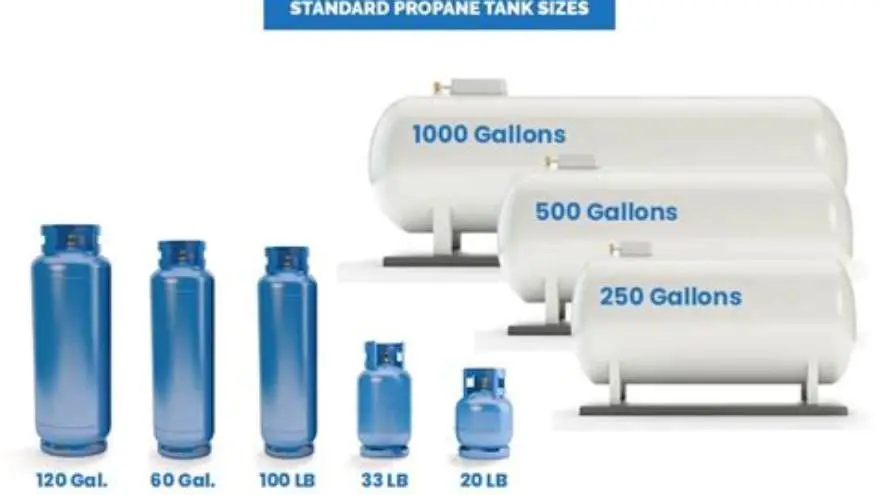
Check the yellow EnergyGuide label and installation paperwork when comparing models. The label gives a standardized comparison, while your bills show how the complete system performs. There is more on propane tank sizes in a separate guide.
- Included: combustion and standby losses inside the furnace.
- Excluded: duct leakage, house insulation, thermostat settings, and climate.
- Not shown: installation quality, sizing, airflow, and maintenance.
How much heat do 80% and 96% furnaces deliver?
For every 100 units of propane energy entering the furnace, an 80% model delivers about 80 units of useful heat. A 96% model delivers about 96 units. The difference is 16 percentage points, not 16 times more heat.
One gallon of propane contains about 91,500 BTU, or British thermal units. An 80% furnace supplies about 73,200 BTU from that gallon. A 96% furnace supplies about 87,800 BTU.
The fixed-heat comparison is more useful than comparing one gallon. Divide 1,000,000 BTU by each furnace's useful output per gallon. That requires about 13.7 gallons at 80% AFUE and about 11.4 gallons at 96% AFUE.
The difference is roughly 2.3 gallons per million BTU delivered. These figures use 91,500 BTU per gallon and assume the furnace operates at its rated efficiency.
| Furnace rating | Fuel energy per gallon | Useful heat per gallon | Propane to deliver 1,000,000 BTU of household heat |
|---|---|---|---|
| 80% AFUE | 91,500 BTU | 73,200 BTU | About 13.7 gallons |
| 96% AFUE | 91,500 BTU | About 87,800 BTU | About 11.4 gallons |
- 80% model: simpler venting in some installations
- 96% model: less fuel wasted at the furnace
- 80% model: more exhaust heat lost
- 96% model: condensate drain and special venting required
Why does actual propane use vary so much?
A furnace's annual propane use depends first on the house's heating demand. A drafty home in a cold climate can need several times more heat than a tight, well-insulated home of the same size. Outdoor temperature, wind, sun exposure, windows, and indoor temperature all change the load.
Furnace sizing matters as well. An oversized furnace reaches the thermostat quickly, shuts off, and repeats the cycle. Short cycling can waste energy, increase wear, and create uneven temperatures. An undersized furnace may run for long periods during severe weather.
Duct condition also affects room comfort and delivered heat. Sealed, insulated runs usually perform better than leaky ducts in unheated spaces. Closed dampers, dirty filters, and blocked returns can reduce airflow.
Thermostat settings create another large difference. Lowering the setpoint usually reduces heat loss because the indoor-outdoor temperature gap becomes smaller. Record gallons used and outdoor conditions before judging the furnace.
- Record the tank level and date before the heating season.
- Write down thermostat settings and furnace run time for several cold days.
- Check the filter, supply airflow, and return grille for restriction.
- Compare fuel use with outdoor temperatures from the same period.
- Ask a qualified technician to verify sizing, combustion, and duct leakage.
Why does a higher AFUE rating not guarantee lower bills?
A higher rating reduces fuel needed for a given amount of furnace heat. It does not guarantee a lower bill because the furnace may run longer, the home may lose more heat, or propane may cost more in your area.
The installation also changes the result. A condensing furnace, usually rated around 90% or higher, extracts more heat from exhaust gases. It needs suitable venting and a condensate drain. Poor drainage or incorrect airflow can cause service problems.
Purchase and installation costs matter too. A 96% furnace may require vent changes, electrical work, condensate handling, or a new flue arrangement. Use your own propane bills rather than a generic savings promise.
The strongest case for higher AFUE usually appears when replacing an old furnace, heating a cold-climate home, or running many hours each winter. Ask for estimated annual fuel use based on your home's measured load.
| Factor | Effect on fuel use | What to check |
|---|---|---|
| AFUE | Changes furnace conversion losses | EnergyGuide label |
| Climate | More cold hours require more heat | Local winter conditions |
| Ducts | Leaks and uninsulated runs waste heat | Attic and crawlspace ducts |
| Sizing | Short cycling can reduce comfort | Load calculation |
| Thermostat | Higher settings increase heat loss | Your schedule and setpoints |
- Higher AFUE: lower combustion losses
- Higher AFUE: useful during long heating seasons
- Higher AFUE: added venting and drainage needs
- Higher AFUE: savings depend on installation cost
How can you estimate fuel use from furnace output?
Start with the furnace input rating in BTU per hour, not its output rating. An 80,000-BTU-per-hour furnace at 80% AFUE delivers about 64,000 BTU per hour before distribution losses. At 96% AFUE, the same input delivers about 76,800 BTU per hour.
Propane contains about 91,500 BTU per gallon. Divide the furnace input by this figure to estimate full-fire fuel flow. An 80,000-BTU-per-hour furnace uses about 0.87 gallon per hour during continuous firing.
Estimate total use with equivalent full-fire hours. Six hours at 80,000 BTU per hour equals 480,000 BTU, or about 5.2 gallons of propane. Use burner-on time, not thermostat run time, if the furnace cycles on and off.
Your home may need less or more than this example. Record burner-on time across several cold days, then compare the estimate with tank readings and delivered gallons. The comparison works best when you account for water-heater use and other propane appliances.
| Input rating | Fuel rate | Six full-fire hours | Approximate propane |
|---|---|---|---|
| 60,000 BTU/h | About 0.66 gal/h | 360,000 BTU | About 3.9 gallons |
| 80,000 BTU/h | About 0.87 gal/h | 480,000 BTU | About 5.2 gallons |
| 100,000 BTU/h | About 1.09 gal/h | 600,000 BTU | About 6.6 gallons |
Which propane furnace efficiency rating should you choose?
Choose based on delivered heat, installation requirements, and expected run time. An 80% furnace can make sense where existing venting suits it and annual heating demand is modest. A 96% furnace is often more attractive when propane use is high and the installation can accept condensing equipment.
Compare input BTU per hour, output capacity, cabinet size, vent route, condensate disposal, blower controls, warranty terms, and service access. A properly sized 80% furnace can outperform a badly installed 96% system in comfort and practical reliability.
Your fuel history gives the best starting point. Gather one or two heating seasons of gallons used and thermostat settings. Then ask for a written load calculation and an estimate based on your actual house.
Renters usually cannot choose the furnace, but they can report long cycles, cold rooms, blocked filters, or unusual fuel use to the landlord. RV and camper owners should use equipment approved for those locations.
- Keep 80%: existing venting works and heating demand is modest.
- Consider 96%: long winters and high annual propane use make savings more valuable.
- Either rating: insist on correct sizing, airflow, and safe installation.
- Before deciding: compare written estimates using your own fuel history.
- 80% choice: fewer installation changes in suitable homes
- 96% choice: better fuel conversion
- 80% choice: greater exhaust loss
- 96% choice: more installation details to manage
For a heavily used propane system, 96% AFUE is usually the stronger efficiency choice, provided sizing and installation are right.
Key points
- 80% AFUE means about 80 units of useful heat per 100 units of fuel energy.
- 96% AFUE saves roughly 16% of fuel against an 80% furnace for the same delivered heat.
- AFUE measures furnace fuel conversion, not the whole heating system.
- A high rating helps most when the furnace replaces an older, low-rated unit.
- Check fuel bills and furnace run time before assuming a new rating guarantees savings.
People also ask
Does 96% AFUE mean only 4% of propane is wasted?
It means the standard furnace test attributes about 4% to fuel-use losses. Duct leakage, house heat loss, blower electricity, and thermostat settings sit outside AFUE.
Can an 80% furnace be more efficient for my house?
It can be the better practical choice if correctly sized and much cheaper to install. A 96% rating won't fix poor airflow or an oversized furnace.
How many gallons does an 80,000-BTU propane furnace use?
At continuous full firing, it uses about 0.87 gallon per hour, based on 91,500 BTU per gallon. Cycling and modulation reduce the hourly average.
Does AFUE include the heat lost in my ducts?
No. AFUE measures furnace fuel conversion under the standard test procedures. Inspect and seal ducts separately, especially in unheated spaces.