Farm propane: what a brooder, grain dryer and heater each burn
Propane uses on the farm fall into heating, drying, power and equipment. Convert each appliance's input rating to gallons, then multiply by logged burner hours. Use manufacturer data for generators and dryers, and your supplier's vaporization chart for cold-weather capacity.
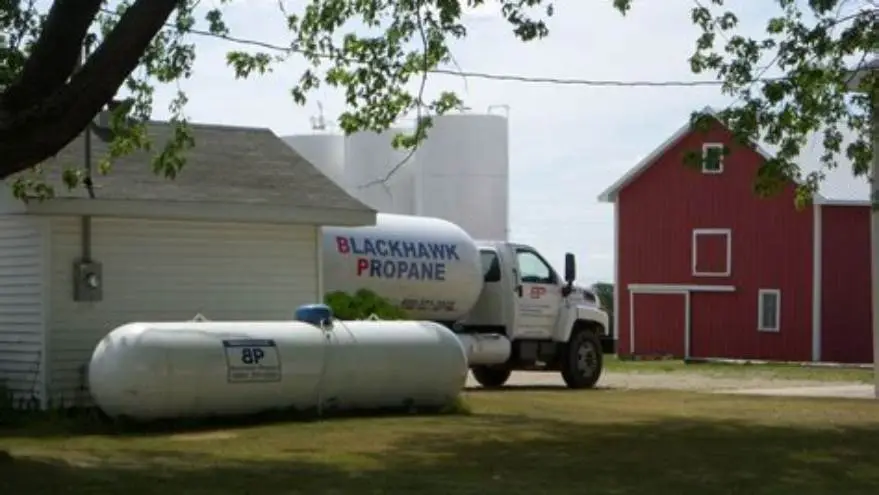
Part of our guide on propane heaters
Propane Facts
- Propane per gallon
- About 91,500 BTU under commonly used reference conditions
- 100 lb cylinder
- About 23.6 gallons of propane at its 80% fill limit
- Full 500 gallon tank
- About 400 gallons at the 80% fill limit
- Grain dryer estimate
- Use the dryer maker or applicable Extension guidance for the crop and drying conditions
- 20 kW generator
- Use the fuel-consumption table for the exact model
- Brooder example
- A hypothetical 200,000 BTU/h input uses about 2.2 gal/h at full fire
- Cold-night heat total
- Add appliance input ratings before checking the supplier's vaporization chart
Contents8 sections
- What are the main propane uses on the farm?
- How many gallons do a brooder, grain dryer and heater burn?
- How does a backup generator's draw compare with heating loads?
- Which farm loads run together in cold weather?
- When do cylinders stop being practical for farm propane?
- How do you estimate your own seasonal propane use?
- Key points
- People also ask
What are the main propane uses on the farm?
Propane uses on the farm sort into four groups. Each group creates a separate load with a burner size and operating schedule.
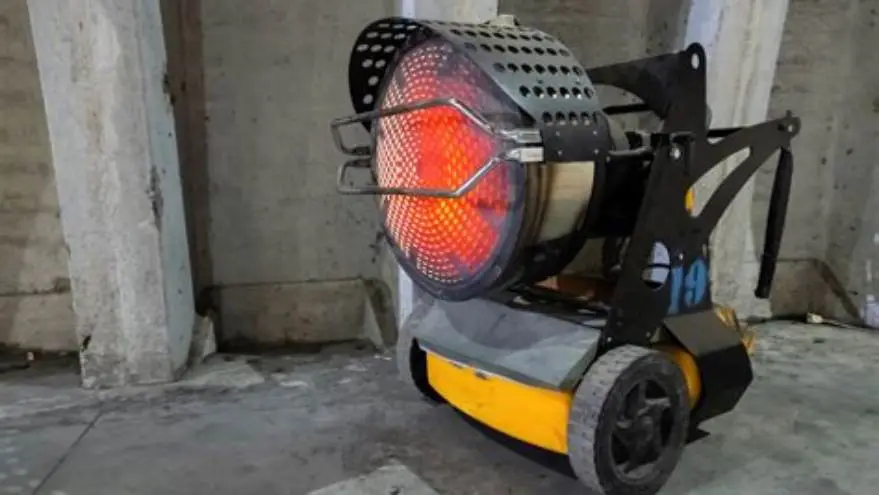
Heating includes brooder houses, farrowing rooms, shop heaters, greenhouses, furnaces and water heaters. Drying includes grain dryers and supplemental bin burners. Power includes standby generators, while equipment includes forklifts, flame weeders and wash-down heaters.
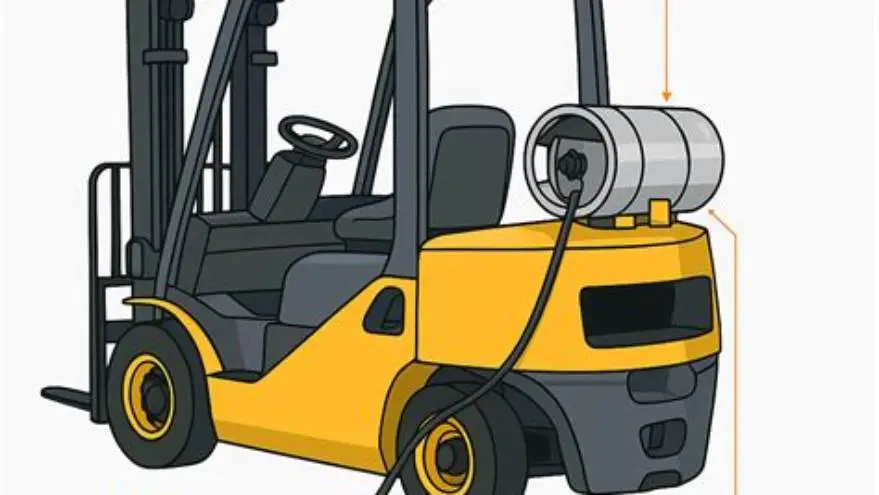
A common 100 lb cylinder contains about 23.6 gallons at the 80% fill limit. Forklift cylinders differ in size, orientation and approved use, so check the truck manual for capacity and operating position.
Start with the appliance data plate, then use the manufacturer instructions for installation and fuel demand. You don't need advanced calculations. The other half of this decision is does a propane forklift tank last.
- Heating: brooder houses, farrowing and nursery heat, shop and barn unit heaters, greenhouses, the farmhouse furnace and water heater.
- Drying: grain dryers and supplemental burners used in damp harvest conditions.
- Power: standby generators that keep fans, pumps, milking equipment and lights running during an outage.
- Equipment: forklifts on cylinders, flame weeders, wash-down water heaters and some irrigation engines.
How many gallons do a brooder, grain dryer and heater burn?
A hypothetical brooder house has eight radiant brooders rated at 25,000 BTU/h each. The total input is 200,000 BTU/h. Divide by 91,500 BTU per gallon and the full-fire estimate is about 2.2 gallons per hour.
Suppose those burners fire for 40% of every hour during a cold seven-day period. That equals 9.6 burner hours daily, or about 21 gallons daily. Fourteen days under the same assumption would use about 290 gallons. This is a worked example, not a field average.
Grain-dryer fuel use depends on crop, moisture removed, airflow, ambient conditions, dryer design and heat recovery. Use the dryer maker's table or applicable state Extension guidance, then compare the estimate with delivery tickets. Extension guidance varies by crop and drying conditions. Before you commit to anything, it is worth looking at propane does a house use.
A 75,000 BTU/h shop heater has a calculated full-fire rate near 0.8 gallons per hour. Running 6.5 full-fire burner hours daily for 80 days would use about 426 gallons, not 390. A 50% run share would reduce that estimate to about 213 gallons.
Input rating is the fuel entering the appliance, not the heat reaching the room. Actual burner runtime reflects cycling, while delivered useful heat also depends on the appliance's listed efficiency. State all three assumptions when presenting a heating estimate.
Any occupied space with combustion equipment needs the ventilation required by the appliance manual. Install carbon monoxide alarms listed to the applicable safety standard, such as UL 2034, and test them regularly. See NFPA 720, National Fire Alarm and Signaling Code, at https://www.nfpa.org/codes-and-standards/nfpa-720-standard-development/720. We cover when conversion savings make sense in its own article.
| Load | Input rating | Gallons per hour at full fire | Example use and conditions |
|---|---|---|---|
| Brooder house, 8 brooders | 200,000 BTU/h | About 2.2 | About 21 gal/day at 9.6 full-fire burner hours daily |
| Grain dryer burner | 2,000,000 BTU/h | About 21.9 | Calculation only. Use the maker's crop and moisture estimate for seasonal gallons |
| Shop unit heater | 75,000 BTU/h | About 0.8 | About 426 gallons at 6.5 full-fire burner hours daily for 80 days |
| Greenhouse heater | 100,000 BTU/h | About 1.1 | About 6.6 gal/night at six full-fire hours |
| 20 kW generator | Model-specific | Model-specific | Use the exact manual's fuel table and logged load hours |
How does a backup generator's draw compare with heating loads?
Generator fuel use varies with engine, generator model, fuel pressure and electrical load. A 20 kW label does not provide enough information to predict gallons per hour.
Find the fuel-consumption table in the exact generator manual. Record the listed rate for each expected electrical load, then multiply each rate by the hours spent at that load.
A hypothetical outage calculation might use 48 hours at a manual-listed rate of 1.8 gallons per hour. That produces 86.4 gallons. The number is useful only when the manual supports the 1.8-gallon rate for that model and load.
Add generator fuel to heating fuel when both appliances use the same supply. Motors can create startup demand, so the installer must size regulators, piping and tank capacity for the actual connected load.
Keep a portable or standby generator outdoors, away from doors, windows and vents. Never run it in a garage, barn or other enclosed area. Follow NFPA 37, Standard for the Installation and Use of Stationary Combustion Engines and Gas Turbines, at https://www.nfpa.org/codes-and-standards/nfpa-37-standard-development/37. Have a qualified technician connect a standby unit.
Which farm loads run together in cold weather?
Make a cold-night list rather than sizing each appliance separately. A hypothetical list might include a 200,000 BTU/h brooder, a 75,000 BTU/h shop heater, a 100,000 BTU/h greenhouse heater and an 80,000 BTU/h furnace. Together they require 455,000 BTU/h when all burners fire.
A generator adds its own fuel demand. Convert the manual's fuel rate to BTU per hour only if you need a combined comparison. The supplier and installer need the connected appliance demand, regulator requirements and piping details.
A tank can hold enough gallons yet fail to supply the required vapor flow. Check tank and cylinder vaporization only once, using the supplier or manufacturer's chart for the vessel, liquid level, lowest temperature and total appliance demand.
The chart determines whether you need a larger tank, manifolded tanks or an approved vaporizer. Local rules also control tank setbacks, vehicle protection, regulators, underground piping and electrical clearances.
Your fire marshal, building department and propane supplier can identify the requirements before installation.
When do cylinders stop being practical for farm propane?
A 100 lb cylinder holds about 23.6 gallons at the 80% fill limit, or roughly 2.2 million BTU using 91,500 BTU per gallon. A 75,000 BTU/h heater would consume that amount in about 29 hours of continuous full-fire operation. Actual runtime depends on cycling and the usable fill.
Fuel volume and vaporization capacity are different limits. Use the supplier or cylinder manufacturer's vaporization chart for the vessel and conditions, as described in the cold-weather section above.
Don't assume a 75,000 BTU/h heater needs two cylinders in a freeze. The required number must come from the applicable chart and the heater's demand. A supplier may specify manifolded cylinders, a larger vessel or a different supply arrangement.
A grain dryer with a liquid-withdrawal system is different from ordinary vapor withdrawal. Vapor-withdrawal cylinders send gas from the headspace to a regulator. High-demand dryers may use liquid withdrawal, an approved vaporizer or a bulk installation designed by the manufacturer and propane contractor. Never convert a cylinder system without the listed equipment and professional design.
A 500 gallon tank holds about 400 gallons at its 80% fill limit. Ask the supplier for its delivery threshold. Low liquid levels can reduce heat transfer and vaporization during cold, heavy demand.
How do you estimate your own seasonal propane use?
Give every load its own rating, operating hours and run share. Then compare the estimate with delivery tickets or tank readings.
Use the input rating printed on the appliance data plate. For a generator, use the model's manual rather than converting its electrical rating into a guessed fuel rate.
Record burner hours where the control system provides them. If you only know occupied hours, state the assumed run share. A seasonal figure without hours per day cannot be reproduced.
- Write down each appliance's input rating in BTU/h and its manufacturer model.
- Estimate hours per day and days in the season. State whether the burner runs continuously or cycles.
- Multiply rating by burner hours to estimate BTU. Divide by 91,500 to estimate gallons.
- Use the dryer maker's or applicable Extension service's estimate for the crop, moisture change and dryer conditions.
- Add the loads sharing one tank, then compare the total demand with the supplier's vaporization chart.
- Compare the estimate with delivery tickets. Ask the supplier to explain any large difference before changing equipment.
| Figure | Treat as | Confirm with |
|---|---|---|
| Appliance input rating | Listed equipment fact | Data plate and installation manual |
| 91,500 BTU per gallon | Approximate conversion value | Propane reference used by your supplier |
| Brooder or shop run share | Site-specific estimate | Burner-hour logs and delivery tickets |
| Dryer fuel use | Crop- and condition-specific estimate | Dryer manufacturer or applicable state Extension service |
| Generator burn per hour | Model-specific specification | Exact generator manual |
| Cylinder or tank vaporization | Site-specific capacity | Supplier or manufacturer's chart |
Key points
- Use the input rating on the data plate when estimating gallons. Record burner hours when you can.
- Use a dryer manufacturer or applicable Extension guidance for your crop, moisture change, airflow and operating conditions.
- A generator's fuel table is model-specific. Check its manual instead of applying a generic rate.
- Tank gallons determine runtime. Vaporization capacity determines whether the appliance receives enough gas at once.
- Ask your propane supplier about delivery levels, tank placement, cylinder storage and local installation requirements.
People also ask
Can a 100 lb cylinder run a shop heater in freezing weather?
Maybe. Check the cylinder's vaporization chart against the liquid level, outdoor temperature and heater input rating. Ask the supplier to calculate the required cylinder count. Don't assume two cylinders are enough.
How low should I let the tank get in winter?
Follow your supplier's delivery threshold. Low liquid levels can reduce heat transfer and vaporization during peak demand.
Does a more efficient heater burn fewer gallons?
Compare input ratings and actual burner hours for the same heating job. Delivered useful heat also depends on listed efficiency. Check the installation manual.
Should I lease or own a bulk tank?
Compare fuel pricing, service, repairs, tank ownership, relocation costs and supplier terms in writing. Local rules still apply to placement and installation either way.
How do I find what my grain dryer actually burns?
Use the dryer maker's crop and moisture tables or applicable Extension guidance. Record starting and ending moisture, bushels, burner hours and delivery gallons. Compare the estimate with the ticket from that batch.