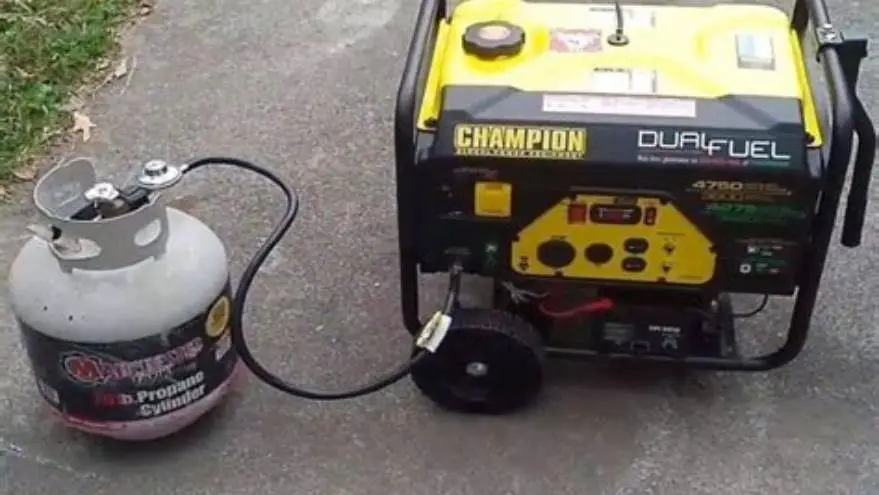
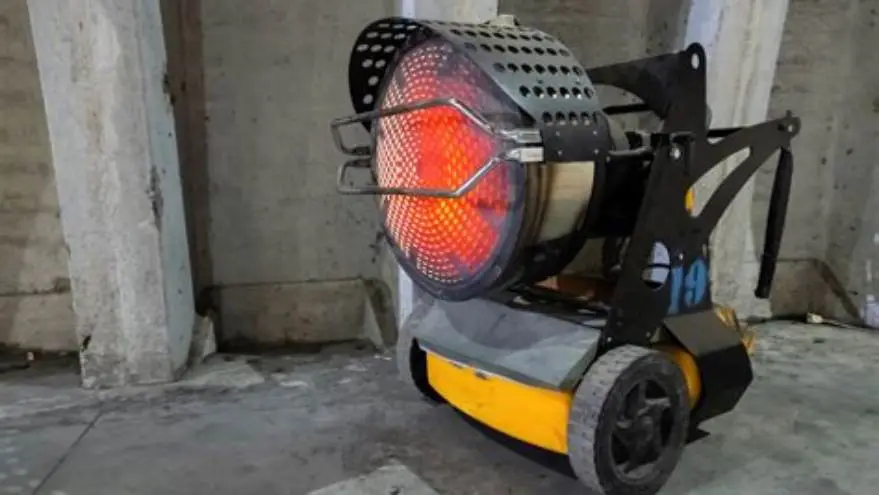
Construction site propane heater: will one 100 lb cylinder keep up
Propane heaters for construction sites need sizing from the heater’s input, inlet pressure, and the supplier’s vaporization chart. A cylinder sold as a 100 lb propane cylinder does not necessarily hold 100 lb during service. The 80% fill rule limits the permitted liquid fill, so confirm the actual propane weight from the supplier or a scale.
Propane Facts
- Nominal 100 lb cylinder
- Capacity label, not guaranteed service fill
- Permitted fill
- Usually limited to 80% of water capacity
- Burn rate
- 1 lb per 21,600 BTU
- 125,000 BTU/hr heater
- about 5.8 lb per hour
- Planning reserve
- Choose your own reserve with the supplier
- Propane boiling point
- about -44 F at atmospheric pressure
- CO exposure limit
- OSHA PEL: 50 ppm, 8-hour TWA
Contents8 sections
- How long will one 100 lb cylinder run a construction site heater?
- Why does a cylinder frost up, and is the cylinder or the heater at fault?
- When is one cylinder not enough, and what should a larger supply include?
- How big a heater does the space need?
- Which propane heaters for construction sites are direct-fired, and which are indirect-fired?
- What do you check on the hose, regulator, and cylinder before lighting up?
- Key points
- People also ask
How long will one 100 lb cylinder run a construction site heater?
A 100 lb cylinder label describes its nominal propane capacity. It does not mean you can always put 100 lb of liquid propane inside. Propane cylinders normally receive an 80% volumetric fill limit, leaving room for liquid expansion. The actual permitted weight depends on the cylinder’s water capacity, tare weight, service rules, and filling procedure.
Check the supplier’s fill ticket or weigh the cylinder. Subtract the TW stamp from the current total weight. That result is the propane weight available now. A supplier can confirm the maximum permitted fill for that exact cylinder.
Propane contains about 21,600 BTU per pound. Divide the heater input by 21,600 to estimate pounds burned per hour. A 125,000 BTU/hr heater uses about 5.8 lb per hour while firing continuously.
A usable quantity of 72 lb would therefore last about 12.4 hours at full fire. That figure is arithmetic, not a promise. Leave the reserve required by your site plan, and account for thermostat cycling, cold-weather vaporization, and the point where the supplier requires a refill. The other half of this decision is will a generator run problems.
| Heater input | Propane burned | Illustrative runtime |
|---|---|---|
| 30,000 BTU/hr | about 1.4 lb/hr | about 52 hours |
| 50,000 BTU/hr | about 2.3 lb/hr | about 31 hours |
| 75,000 BTU/hr | about 3.5 lb/hr | about 21 hours |
| 125,000 BTU/hr | about 5.8 lb/hr | about 12.4 hours |
| 200,000 BTU/hr | about 9.3 lb/hr | about 7.7 hours |
Why does a cylinder frost up, and is the cylinder or the heater at fault?
Propane stays liquid under pressure and boils at about -44 F at atmospheric pressure. Boiling takes heat from the cylinder wall and surrounding air. The wetted wall area helps determine how quickly the cylinder can supply vapor.
Cold weather, a low liquid level, and a high heater input can reduce vapor delivery. Frost may form near the liquid line, while pressure at the regulator falls. The allowable continuous withdrawal rate must come from the supplier’s vaporization chart for the exact cylinder, fill level, and temperature. Do not use a generic BTU-per-cylinder rule.
Ask the propane supplier for the chart or engineering data used to size the bank. Provide the cylinder model or water capacity, starting fill level, lowest expected temperature, heater input, and required inlet pressure. Supplier charts, manufacturer data, or a qualified gas contractor’s calculation should support the selection. There is more on how long does a propane forklift tank last in a separate guide.
A starved heater often starts normally, weakens after running, and recovers after resting. Frost on the cylinder supports that diagnosis. A heater that misbehaves from the first minute may have a fuel-train, regulator, control, or combustion fault.
- Inspect the lower cylinder for frost or heavy condensation near the liquid level. Never heat it with a torch, flame, or improvised device.
- Note when the problem begins. A delay after strong operation points toward supply, but it does not prove the cause.
- Turn the heater down only as a diagnostic check. Do not treat a lower setting as a permanent design solution.
- Stop if the flame turns yellow, soot appears, the heater trips a safety control, or a nearly full cylinder fails in mild conditions. Call the supplier or a qualified technician.
When is one cylinder not enough, and what should a larger supply include?
A larger bank can provide more vaporizing surface, but the number of cylinders must come from the supplier’s chart. The chart must match the exact cylinder, fill level, outdoor temperature, and continuous withdrawal rate.
The heater’s required inlet pressure matters just as much. Select a regulator that can deliver the heater’s maximum input at that inlet pressure, with the required adjustment range and approved connections. Check pressure drop through the hose, manifold, excess-flow devices, and fittings. A regulator with the wrong pressure or capacity can imitate a starved cylinder. For the detail, see our notes on propane uses problems.
A qualified temporary-heating or propane professional should design multi-cylinder manifolds and large-heater installations. Ask for a written selection showing cylinder count, regulator capacity, hose size, pressure, changeover arrangement, and cold-weather assumptions.
A larger tank or vaporizer may suit equipment running for days. A vaporizer uses heat to convert liquid propane into vapor, so it brings extra equipment, controls, clearances, and inspection requirements. Let the supplier or qualified contractor select it.
- Use supplier vaporization data for the exact cylinder and weather conditions.
- Match the regulator to the heater’s required inlet pressure and maximum input.
- Confirm hose, manifold, changeover, and excess-flow-device capacity.
- Use qualified help for multi-cylinder systems, large heaters, or vaporizers.
How big a heater does the space need?
A heat-load estimate must include the slab, walls, roof, infiltration, outdoor weather, construction stage, and desired indoor temperature. Openings and temporary plastic enclosures can change the load quickly. A site-specific heat-loss calculation is safer than a single air-change assumption. People in this spot often ask about autogas vehicle advantages as well.
Measure the building dimensions, insulation, exposed surfaces, door openings, ventilation, and expected wind exposure. Include the cold slab and walls because they absorb heat before the air reaches the target temperature. A qualified HVAC or temporary-heating professional can calculate the design load.
The cylinder sees the heater’s input, not the room’s calculated heat loss. A 125,000 BTU/hr heater can demand that full rate whenever its burner fires, even if the space needs less heat at that moment. A thermostat reduces average fuel use but does not reduce peak input during a firing cycle.
Choose the heater from the heat-loss calculation, then size the fuel system from the heater’s rated input and operating conditions. Keep those two calculations separate.
Which propane heaters for construction sites are direct-fired, and which are indirect-fired?
Direct-fired heaters burn gas in the airstream entering the room. Their exhaust includes carbon dioxide, water vapor, and possible carbon monoxide (CO). They also consume room oxygen. Direct-fired units can add substantial moisture, which can condense on cold framing, insulation, tools, and finishes.
Indirect-fired heaters burn gas inside a heat exchanger and send exhaust outdoors through a flue. Warm air reaches the room without the combustion gases. The setup needs suitable flue routing, clearances, power, and combustion air.
OSHA’s construction temporary-heating rule, 29 CFR 1926.154(a)(1), requires ventilation and safeguards for heaters. OSHA lists carbon monoxide’s occupational permissible exposure limit in 29 CFR 1910.1000, Table Z-1, as 50 ppm averaged over an 8-hour workday. That limit is an occupational exposure limit, not a universal alarm setting.
Use a listed CO monitor suitable for the work area and follow its manual, the heater manual, the site-safety plan, and applicable regulations. Verify the monitor’s listed operating temperature, dust and moisture rating, sensor type, and certification before use. Do not select an alarm threshold from this article. A competent safety professional should set the monitoring plan.
| Feature | Direct-fired | Indirect-fired |
|---|---|---|
| Enters the work area | Warm air, combustion gases, and water vapor | Warm air only, if flued correctly |
| Fresh-air opening | Required, size set by the manual and site requirements | Combustion air and room ventilation still require planning |
| CO monitoring | Follow the site monitoring plan and equipment requirements | Use monitoring where the risk assessment requires it |
| Flue and power | Usually no flue, little or no power | Flue outdoors and power for the blower |
| Fit | Open or well-ventilated shells | Enclosed or occupied spaces when properly installed |
What do you check on the hose, regulator, and cylinder before lighting up?
Place cylinders outside the heated space, upright, and secured against tipping. Keep them away from vehicle traffic, ignition sources, exits, and damage. Local fire rules can set distances, barriers, and temporary-use exceptions.
NFPA 58, Liquefied Petroleum Gas Code, contains requirements for LP-Gas containers, equipment, protection, and building placement. The adopted edition and local amendments control the job. The authority having jurisdiction, propane supplier, or qualified contractor should confirm the applicable provisions.
Read the heater data plate and manual for input, inlet pressure, regulator type, maximum hose length, connector type, and clearances. Regulator capacity must meet the heater’s maximum demand at the required pressure. Never raise the regulator setting beyond the manufacturer’s instruction.
Inspect hoses, fittings, manifolds, and regulators for damage. Use only listed equipment intended for the pressure and propane service.
- Read the heater’s data plate for input, inlet pressure, regulator requirements, and clearances.
- Place cylinders outside, upright, and secured, with protection from traffic and impact.
- Inspect every hose, regulator, manifold, and fitting. Replace damaged parts instead of repairing them with tape.
- Connect the fuel train exactly as the heater and regulator manuals show.
- Open the cylinder valve slowly and test connections with an approved leak-detection method. Bubbles mean a leak: close the valve and replace the faulty part.
- Confirm ventilation, monitoring, clearances, and the site’s emergency procedure before lighting.
Key points
- Divide the heater's BTU/hr by 21,600 to estimate pounds burned per hour. A 125,000 BTU/hr heater uses about 5.8 lb per hour while firing continuously.
- Size the cylinder bank from the supplier’s vaporization chart for the exact cylinder, fill level, and lowest expected temperature. Check the heater’s required inlet pressure and regulator capacity too.
- Direct-fired heaters send combustion gases and substantial water vapor into the work area. Use the ventilation, monitoring, and site-safety requirements listed for your equipment.
- Use a qualified temporary-heating or propane professional for large heaters, multi-cylinder manifolds, and any vaporizer system.
People also ask
Can I lay a 100 lb cylinder down or tip it to get more gas out?
No. Keep a standard vapor-draw cylinder upright. Laying it down can send liquid propane into the regulator and heater. Use liquid-draw equipment only when the complete system is designed for it.
How do I know how much propane is left without a gauge?
Weigh the cylinder. Subtract the TW stamped on the collar from its current weight. The result is pounds of propane. Divide by the heater’s pounds-per-hour rate for an arithmetic runtime estimate.
Does a thermostat change how many cylinders I need?
It reduces average fuel use but not peak draw. The cylinder system still must supply the heater’s rated input during each firing cycle. Use the supplier’s chart for that peak demand.
Can I turn up the regulator to fix a sputtering heater?
No. Use the pressure specified by the heater manual. Check the cylinder chart, regulator capacity, hose size, and inlet pressure with the supplier or a qualified technician.