500 gallon propane tank: how many days do 400 usable gallons give?
An 80,000 BTU/h furnace running six hours daily uses about 5.2 gallons of propane. Under those conditions, 400 usable gallons last about 77 days. Other appliances and longer operating hours change the result.
Part of the guide: 20 lb propane tank full weight: about 37 lb, but read the TW stamp
Propane Facts
- Full tank holds
- about 400 gal at an 80% fill
- Energy in 400 gal
- about 36.6 million BTU
- Gallons per hour
- BTU/h input ÷ 91,500
- One gauge point
- about 5 gal on a 500 gal tank
- Reorder level
- supplier-dependent, often near 20-30% gauge
- 80,000 BTU/h furnace, six hours daily
- about 77 days in this example
- Tank water heater, 1.5 burner hours daily
- about 600 days in this example
Contents9 sections
- How long does a 500 gallon propane tank last?
- Why does a 500 gallon tank hold only 400 gallons?
- How do you turn appliance BTU input into days of propane?
- How many days do 400 gallons run a furnace, water heater, range or generator?
- How can you measure propane use between deliveries?
- What shifts the answer, and when should you order a refill?
- What happens if the tank runs dry?
- Key points
- People also ask
How long does a 500 gallon propane tank last?
How long does a 500 gallon propane tank last? About 77 days for an 80,000 BTU/h furnace running six hours daily. Connected appliances and operating hours can reduce that runtime to days or stretch it to years.
For this furnace example, the burner uses about 5.2 gallons daily. Four hundred usable gallons divided by that rate gives roughly 77 days under those conditions.
Whole-home use changes the result. A furnace, water heater and range consume about 920 gallons across the stated 150-day season. One 400-gallon fill therefore lasts about 65 days at that combined rate.
Generators need a separate calculation. Check the manufacturer's gallons-per-hour table for your exact model and electrical load. For the detail, see our notes on calculating hours from appliance BTUs.
Why does a 500 gallon tank hold only 400 gallons?
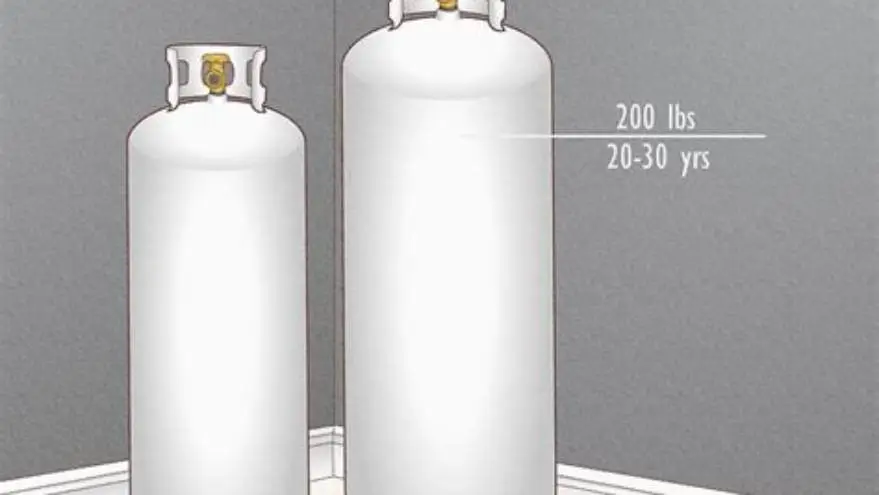
Liquid propane expands as it warms, so fixed tanks aren't filled to the top. A supplier normally fills to about 80% of the tank's volume, following applicable safety rules such as NFPA 58.
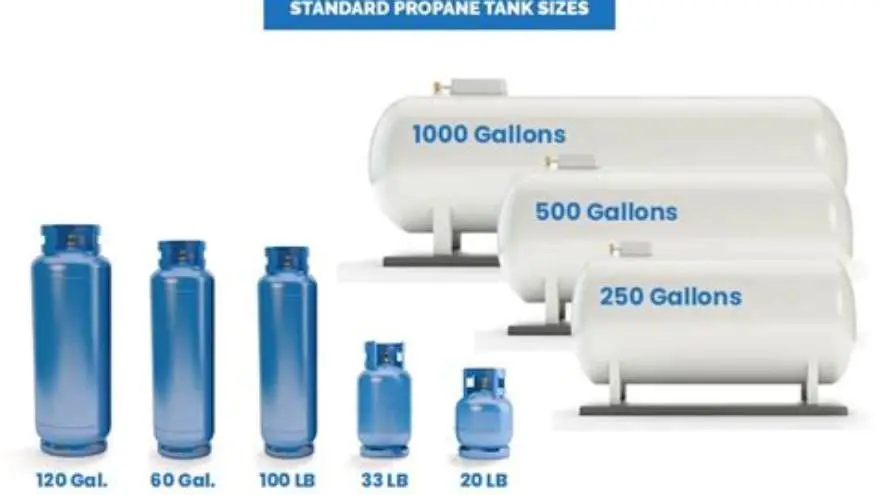
A full 500 gallon tank therefore holds about 400 gallons of liquid propane. Its gauge reads about 80, not 100. The 500 gallon label describes total tank volume, not the amount available at every delivery or reading.
The practical amount available depends on the current gauge reading. At 30%, simple capacity math gives about 150 gallons. At 20%, it gives about 100 gallons. A tank delivered at a different level contains a different amount. We go through propane cylinder sizes step by step elsewhere on the site.
A reorder level is not the same as empty capacity. It leaves fuel for delivery delays, cold weather and changing demand.

MyPropane | Propane Tank Monitor | 4G/5G LTE | Above & Under Ground Tanks |
It reads the remote-ready dial on your 500-gallon tank and shows its remaining percentage from anywhere, so you can track how many days a fill actually lasts.
How do you turn appliance BTU input into days of propane?
Use this formula: gallons per hour = BTU/h input ÷ 91,500. The 91,500 figure is the approximate heat content of one gallon of propane. Use the input rating, not the appliance's useful heat output.
Take an 80,000 BTU/h furnace. Divide 80,000 by 91,500 and you get about 0.87 gallons per hour. At nonstop operation, 400 divided by 0.87 equals about 460 hours, or 19 days.
Furnaces cycle on and off, so the nonstop figure doesn't predict actual furnace runtime. At six burner hours daily, the same furnace uses about 5.2 gallons daily. Four hundred gallons lasts about 77 days in that duty-cycle example.
BTU calculations estimate burner fuel consumption. They predict furnace runtime only after you assume daily operating hours or a duty cycle.
- Find the input rating in BTU/h on each appliance's nameplate. For a generator, use the manufacturer's fuel table instead of converting the nameplate rating.
- Divide the input by
91,500to get gallons per hour. - Multiply gallons per hour by assumed daily burner hours.
- Divide the available gallons by daily gallons to estimate days.
How many days do 400 gallons run a furnace, water heater, range or generator?
The table shows labeled worked examples from 400 gallons available. The running times are assumptions, not promises. Change them to match your home.
The furnace example uses 80,000 BTU/h for six hours daily. The tank water heater uses 40,000 BTU/h for 1.5 burner hours daily. A range and oven use a combined 15,000 BTU/h average for 1.5 hours daily.
The furnace uses most of the fuel in this heating example. It consumes about 783 gallons across a 150-day season, while the water heater uses about 99 gallons and the range about 36 gallons. The combined total is about 920 gallons.
A generator cannot use the table's figure as a universal result. Find the exact model's gallons-per-hour value at your expected electrical load. A generator using 2.5 gallons per hour would consume 300 gallons in five days, but only at that stated rate.
| Appliance | Input (BTU/h) | Gallons per hour | Assumed running time | Days from 400 gallons |
|---|---|---|---|---|
| Furnace | 80,000 | 0.87 | 6 hours a day | about 77 |
| Tank water heater | 40,000 | 0.44 | 1.5 burner hours a day | about 600 |
| Range and oven | about 15,000 average | 0.16 | 1.5 hours a day | about 1,650 |
| Standby generator | model-dependent | Use manufacturer's table | nonstop | Model-dependent |
How can you measure propane use between deliveries?
Nameplate math estimates what an appliance could consume. A delivery history measures the property's actual use during a specific period. Weather, thermostat settings, hot-water use and cooking habits affect the result.
Use one delivery-history method. Compare two deliveries ending near the same gauge level, then divide gallons delivered by the days between deliveries.
For example, 262 gallons delivered 73 days after the previous delivery equals about 3.6 gallons daily. That rate would use roughly 275 gallons in 76 days.
A gauge can help when invoices aren't available. If the reading falls from 80 to 45 over 30 days, simple gauge math estimates 175 gallons used, or about 5.8 gallons daily.
Treat the gauge as a rough indicator, not a precise linear fuel meter. Temperature, gauge condition, tank shape and reading angle affect it. A 50% reading doesn't guarantee exactly half the available fuel.
A wireless monitor can make regular readings easier. Choose one compatible with your gauge and ask the supplier whether it supports your tank.
- Compare two deliveries ending near the same gauge level.
- Record the gallons delivered and the days between deliveries.
- Divide gallons delivered by the days between deliveries.
- Use that daily figure to estimate how long the next practical delivery amount may last.
| Tank size (gallons) | Gallons at 80% gauge | Gallons at 30% gauge | Gallons at 20% gauge |
|---|---|---|---|
| 120 | 96 | 36 | 24 |
| 250 | 200 | 75 | 50 |
| 500 | 400 | 150 | 100 |
| 1,000 | 800 | 300 | 200 |
What shifts the answer, and when should you order a refill?
Climate, house size, insulation and appliance efficiency all change consumption. Generator load and tank temperature also matter. Use your measured daily rate when planning for winter.
A low tank can deliver less vapor during very cold weather, especially when a large appliance starts. Ask the supplier or tank manufacturer for vaporization information if your generator, furnace or snow-melt system needs high output.
Follow your supplier's recommended reorder level; many suppliers use a threshold in this range, but policies vary. Leave extra time for storms and delayed truck access.
- Climate: colder weather usually means more furnace runtime.
- House size and insulation: a larger or draftier home loses heat faster.
- Furnace efficiency: a higher-efficiency furnace generally needs less fuel for the same delivered heat.
- Cold vaporization: a low tank and cold weather can reduce the gas delivery rate.
What happens if the tank runs dry?
A run-out can extinguish pilot lights and burners. The supplier or a qualified technician may require a leak test before restoring service, and relighting procedures depend on the appliances and local rules.
Service policies and charges vary by supplier. Ask what inspection, delivery and restart steps apply before winter. Don't assume every supplier handles a run-out the same way.
Key points
- A 500 gallon tank holds about 400 gallons at an 80% fill, not at every delivery or gauge reading.
- Furnace-only use can last about 77 days in the stated six-hour daily example.
- A furnace, water heater and range can use about 920 gallons across the stated 150-day example season.
- The gauge shows approximate tank contents, while the reorder level marks practical reserve.
- BTU calculations estimate burner fuel consumption. They need an assumed duty cycle to estimate furnace runtime.
- Follow your supplier's recommended reorder level; many suppliers use a threshold in this range, but policies vary.
People also ask
Can I use the last 20% of the tank?
A 20% gauge reading on a 500 gallon tank represents roughly 100 gallons by simple capacity math. The gauge is approximate, and cold weather can reduce vapor delivery. Follow your supplier's recommended reorder level.
Does an underground 500 gallon tank last longer than an above-ground one?
The capacity is the same when both tanks hold about 400 gallons at an 80% fill. Soil can keep an underground tank warmer during cold weather, which may help vapor delivery. Consumption still depends on the appliances and their running time.
Where do I find my furnace's BTU input?
Look for the nameplate inside the cabinet or blower-compartment door. It lists input in BTU/h or MBH, where 80 MBH means 80,000 BTU/h. Don't touch the gas valve or lines.
How long will 400 gallons run a generator in an outage?
Use the generator manufacturer's gallons-per-hour table for your exact model. Check the figures at the electrical loads you expect, then divide the gallons available before your chosen reserve by that rate. Runtime can change sharply between light and full load.