Why does a propane tank ice up? Heavy draw, low fill, or a fault
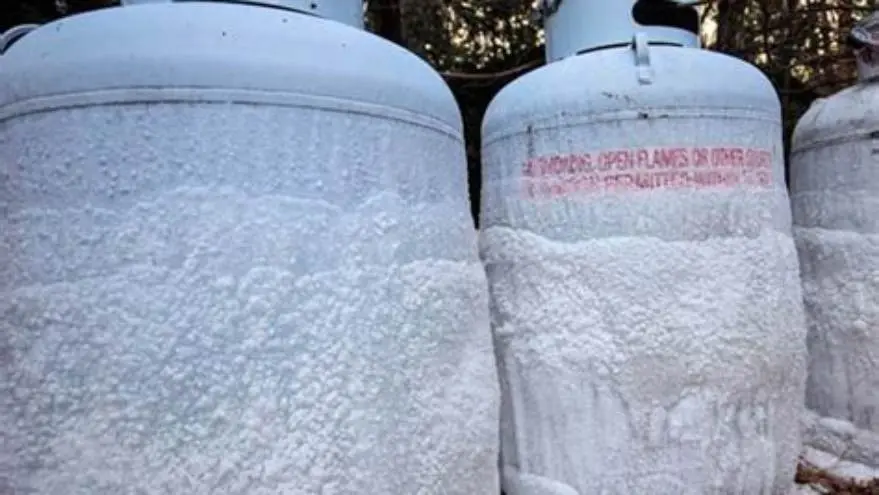
Why does a propane tank ice up? Liquid propane absorbs heat as it becomes vapor, cooling the steel below water’s freezing point. Frost across the tank can follow heavy demand. Frost on a regulator, valve, hose, or fitting may signal liquid carryover, restricted flow, regulator trouble, or leakage.
Part of the guide: Low grill flame: reset the tank valve before replacing the regulator
Propane Facts
- Normal boiling point
- About -44 F at standard atmospheric pressure
- Why the wall cools
- Liquid propane absorbs heat as it becomes vapor
- Visible frost
- Moisture freezes on a wall below 32 F
- Typical fill limit
- Often about 80% of container volume, subject to the tank and local requirements
- Appliance consumption
- Read the appliance data plate or manual
- Appliance pressure
- Use the appliance data plate or manual, not a general assumption
Contents8 sections
- Why does a propane tank ice up in the first place?
- Why does a low tank freeze sooner than a full one?
- How can you tell tank frost from a dangerous frost pattern?
- What can send liquid propane toward the regulator?
- What should you do if the flame weakens?
- What fixes propane tank frosting safely?
- Key points
- People also ask
Why does a propane tank ice up in the first place?
Propane inside the tank exists mostly as a liquid with vapor above it. When an appliance runs, liquid propane changes into vapor and absorbs heat from the liquid and tank wall. If the wall falls below the freezing point of moisture, water in the air freezes on the steel.
The tank can supply heat through its wetted surface, which is the part of the wall touching liquid propane. The tank type, exposed surface area, air temperature, wind, fill level, and appliance demand all affect sustained vaporization. A tank supplier must size the container for the appliance load and the lowest temperature you expect.
A broad frost band on the tank body can therefore appear during normal use. It does not prove the tank is empty or faulty. A frost line is only a rough visual clue, not a fuel gauge or a capacity measurement.
Why does a low tank freeze sooner than a full one?
A lower fill level leaves less liquid touching the tank wall. Less wetted surface area means less wall is available to absorb heat from the surrounding air. The remaining liquid can cool faster during a sustained draw, so pressure may fall and frost may appear sooner. For the detail, see our notes on propane tank not releasing gas.
That pressure drop is a normal part of propane vaporization. It does not automatically mean the regulator or appliance has failed. A restricted hose, defective regulator, blocked piping, or appliance fault can produce similar symptoms, so the whole system needs inspection when output falls.
Tank size matters for the same reason. A larger tank generally has more wetted surface area and usually supports a higher sustained vaporization rate. The supplier still must select the tank for your appliance load, tank type, and lowest expected temperature.
Estimate fuel use with a worked formula instead of guessing from frost. Convert the appliance's stated consumption into pounds per hour, then divide usable propane mass by pounds consumed per hour. Use the tank manufacturer's usable capacity and the appliance data plate or manual for your own setup.
| Condition | Why it matters | Likely effect |
|---|---|---|
| Higher appliance demand | More liquid changes to vapor each hour | More cooling and possible frost |
| Smaller tank | Usually less wetted surface area | Lower sustained vaporization capacity |
| Lower fill level | Less liquid touches the tank wall | Less available heat-transfer area |
| Colder air | Less heat flows into the tank | Lower vaporization capacity |
| Wind or damp air | Wind removes heat, while moisture makes frost easier to see | More visible or faster frost |
| Normal idle period | No appliance demand removes heat from the tank | Frost usually melts as the tank warms |
How can you tell tank frost from a dangerous frost pattern?
Frost across the tank body can appear during ordinary appliance use. Liquid propane absorbs heat as it becomes vapor, cooling the steel and freezing moisture outside. A broad, even layer usually matches heavy vapor demand. It should still clear after demand drops and the tank warms.
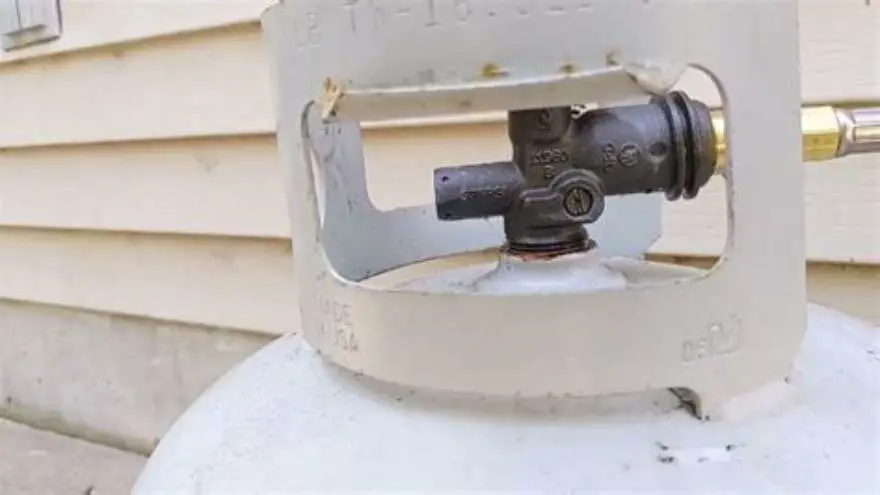
Frost concentrated on a regulator, valve, hose, or single fitting needs more caution. Possible causes include liquid propane reaching the regulator, excessive flow, moisture, a restriction, regulator trouble, or a leak. Frost location cannot prove which fault exists. No frost and no odor cannot rule out a leak.
Treat gas odor, hissing, bubbles at a connection, damaged equipment, or persistent local frost as warning signs. Turn off the appliance only if you can do so without entering danger. Leave the area, then call the propane supplier or emergency services from a safe location. Don't operate switches or create sparks. Wait for qualified help.
| Location | What it can suggest | Safe response |
|---|---|---|
| Broad area on the tank body | Cooling from vaporization during appliance use | Reduce demand if needed and monitor safely |
| Regulator, valve, or hose | Liquid carryover, high flow, moisture, restriction, regulator trouble, or leakage | Stop using the appliance and arrange inspection |
| One connection or fitting | Possible leak or a local restriction | Leave the area if gas is suspected and call from safety |
| Frost with weak or abnormal flames | Flow or pressure may be inadequate | Shut the appliance off and seek qualified help |
What can send liquid propane toward the regulator?
Appliance regulators are designed to receive vapor, not liquid propane. Liquid carryover can chill the regulator and interfere with pressure control. An overfilled container, a tipped or poorly positioned cylinder, unusual flow, or a system problem can contribute.
Keep portable cylinders upright and stable. Keep stationary tanks in the position specified by the manufacturer. Do not lay a cylinder on its side or place it where liquid can cover the vapor outlet. Tank placement, clearances, protection, and ventilation must follow the tank manufacturer's instructions and local code.
Warning signs can include heavy regulator frost, a cold or frosted hose, yellow or lifting flames, roaring or surging, repeated pilot failure, or a sudden change after filling or moving the tank. Those signs do not identify one cause, so stop and arrange an inspection.
- Stop using the appliance if heavy or persistent frost forms on the regulator, valve, or hose.
- Leave immediately if you smell gas, hear hissing, see bubbling, or find damaged equipment.
- Call the propane supplier or emergency services from a safe location.
- Do not relight the appliance until the system has been checked.
What should you do if the flame weakens?
A flame that weakens as frost builds can reflect a pressure drop during vaporization. It can also indicate a restricted hose, defective regulator, blocked piping, or an appliance problem. Frost cannot separate those causes by itself.
Do not diagnose appliance gas pressure unless the appliance manual specifically describes the procedure. A qualified technician can measure inlet and manifold pressure at the appliance test port and compare those readings with the appliance's data plate or manual. The technician can also inspect the regulator, hose, piping, and appliance together.
If the appliance manual gives a reset procedure for a suspected excess-flow restriction, follow it. Otherwise, shut the appliance off and have the supplier or a qualified technician inspect it.
Do not install a pressure gauge, change a regulator, bypass a safety device, or disconnect gas fittings unless the manual specifically permits the action and you are qualified to perform it.
What fixes propane tank frosting safely?
Reduce the appliance demand if you can do so without approaching the equipment. Turn down the appliance or use fewer burners. Stop if the flame becomes abnormal, the regulator frosts, or you suspect a leak.
Check only what you can inspect safely from outside the system. Keep the tank outdoors, upright, stable, unobstructed, and installed with the required clearances. Follow the tank manufacturer's instructions and local code. Do not position the tank to receive deliberate heating from sunlight, a heater, a heat gun, hot water, or another device.
Use the fixed gauge on a stationary tank when checking the fuel supply. For a portable cylinder, weigh it and subtract the stamped tare weight, often marked TW, from the total weight. Frost is not an accurate fuel gauge.
Ask the propane supplier to confirm the tank's fill, vaporization capacity, regulator sizing, and installation. A larger tank generally provides more wetted surface area, but the supplier must match it to the appliance load and lowest expected temperature.
A second cylinder or a larger tank may help only after the supplier confirms the design. Equipment changes need the correct regulator, piping, connections, clearances, and local approval.
- Lower the appliance demand if the appliance remains safe and its flame stays normal.
- Stop using the system if frost appears on the regulator, valve, hose, or a connection.
- Leave the area and call from safety if you smell gas, hear hissing, see bubbling, or find damage.
- Have the supplier or a qualified technician inspect pressure, flow, regulator condition, hose, piping, and appliance operation.
- Ask the supplier to size any replacement tank or added cylinder for the coldest expected temperature and full appliance load.
Key points
- Frost spread across the tank body can result from vaporization during heavy appliance use. It is only a rough visual clue about cooling and fill level.
- Sustained vaporization depends on tank type, wetted surface area, temperature, fill level, and appliance load. Ask the supplier to size the tank for your coldest expected conditions.
- Heavy or persistent frost on the regulator, valve, or hose is abnormal enough to stop using the appliance and arrange an inspection.
- If you smell gas, hear hissing, see bubbling at a connection, find damaged equipment, or see localized frosting, leave the area and call from a safe location.
- Keep the tank outdoors, upright, stable, unobstructed, and installed under the tank manufacturer's instructions and local code. Never heat it deliberately.
People also ask
Does frost mean my tank is almost empty?
No. Frost can result from vaporization during appliance use. Check a stationary tank with its fixed gauge, or weigh a portable cylinder and subtract its stamped tare weight. A frost line is only a rough visual clue.
Can I keep using an appliance while the tank body is frosted?
Tank-body frost can occur during normal use when the flame stays normal and no gas warning signs exist. Stop using the appliance if frost forms on the regulator, valve, hose, or a connection, or if the flame changes.
What should I do if I smell gas near the tank?
Leave the area immediately. Avoid switches, flames, vehicles, and anything else that can create a spark. From a safe location, call the propane supplier or emergency services.
Will a tank blanket or warming pad stop the frost?
Do not add a blanket, warming pad, heater, hot water, or other heat source unless the tank manufacturer and supplier specifically approve it. Ask the supplier to correct sizing, placement, or flow problems instead.
At what temperature does propane stop boiling?
Propane's normal boiling point is approximately -44 F at standard atmospheric pressure. That does not mean every tank stops supplying an appliance at that temperature. Sustained vaporization also depends on tank type, wetted surface area, fill level, temperature, and appliance load. Ask the supplier for capacity at your lowest expected temperature.