Propane exchange vs refill: what a pound of gas costs each way
Refilling can cost less per pound, but the result depends on your total charge and delivered amount. Compare equal quantities of propane, not a full refill against a smaller exchange. Account for any propane already inside your cylinder before deciding.
Part of the guide: 20 lb propane tank full weight: about 37 lb, but read the TW stamp
Propane Facts
- Fair comparison
- Compare equal delivered propane amounts
- Refill billing
- May use pounds, gallons, minimums, or added fees
- 80% fill rule
- Leaves room for liquid propane expansion
- Propane weight per gallon
- About 4.24 lb at 60°F, used as an estimate
- First requalification
- Often 12 years for applicable DOT cylinders, subject to current rules
- BTU per pound
- About 21,600 BTU
Contents8 sections
- Why isn't the sticker price enough?
- How do you calculate the local cost per pound?
- What do nominal capacity, net contents, and the 80% rule mean?
- When does a cylinder need DOT requalification?
- Who should choose exchange and who should refill?
- What does cold weather tell you about a light cylinder?
- Key points
- People also ask
Why isn't the sticker price enough?
An exchange and a refill sell different services. The prices can also cover different quantities of propane. Start by writing down the exchange price, refill charge, and amount delivered by each option.
A standard grill cylinder is often described by its nominal capacity. The container's tare weight is separate from its propane weight. The permitted fill depends on the cylinder, valve, temperature, and filling procedure.
A refill adds propane to the cylinder you own, if the station accepts it. An exchange gives you a replacement cylinder from the operator's stock. The delivered amounts might not match.
Exchange has a trap worth knowing. You forfeit any propane still in the cylinder you hand over. Trade a tank with 5 lb left and you've thrown that gas away. The swap price stays the same whether your old cylinder is empty or half full. At an illustrative $1.47 a pound, that's about $7 gone. Burn the tank down first, then trade it near empty. We cover understanding requalification rules in its own article.
How do you calculate the local cost per pound?
Collect prices from the actual refill station or exchange cage near you. Record the quoted total price, net contents, fees, and taxes before comparing options.
An exchange uses the replacement cylinder's net contents statement. Many exchange cylinders show 15 lb, but the label controls your calculation. Divide the total paid by that marked amount.
A refill uses the pounds added on your receipt. If the station bills gallons, record the gallons and the supplier's conversion. A common estimate is 4.24 lb per gallon at 60°F, but supplier records are better.
Ask for a receipt showing pounds or gallons. Record every minimum charge, environmental fee, service fee, scale charge, and tax. Don't estimate contents from the cylinder's name.
Suppose the exchange costs $22 and contains 15 lb. The rate is $1.47 per pound. That example sets the rate used below. A refill adding 18 lb for $16 costs about $0.89 per pound.
The refill cylinder may already contain propane. Let R mean its remaining propane, and P mean the pounds added. Compare equal delivered amounts, not just sticker prices. An exchange costs less when its total price per delivered pound is lower.
- Exchange rate = total exchange price ÷ labelled net contents.
- Refill rate = total refill charge ÷ pounds added.
- Record prices and net contents from the actual local station or exchange cage.
| Option | Total price paid | Propane delivered | Cost per pound |
|---|---|---|---|
| Exchange example | $22.00 illustrative price | 15 lb on replacement label | $1.47 |
| Refill example | $16.00 illustrative price | 18 lb on receipt | $0.89 |
| Refill with added fee | $20.00 illustrative price | 18 lb on receipt | $1.11 |

travel inspira Digital Luggage Scale
Weighs your propane cylinder up to 110 lb and gives clear readings in 0.1-lb steps, so you can use the tank's stamped tare weight to estimate remaining propane before you choose exchange or refill.
What do nominal capacity, net contents, and the 80% rule mean?
Nominal capacity describes the cylinder's advertised size. Net contents describe the propane supplied inside it. The steel container weight belongs to neither figure.
The 80% rule leaves room for liquid propane to expand as temperatures rise. It concerns the permitted fill level, not one universal propane weight. Water capacity, cylinder design, and approved filling methods affect the permitted amount.
Use the label when comparing exchange and refill prices. An exchange label states the propane supplied. A refill receipt states the propane added. Those figures matter more than the cylinder's marketing name.
A weight check can estimate remaining propane. Find the stamped tare weight, often marked TW. Tare weights vary, so don't assume a common value. For example, a cylinder marked TW 17 weighs 17 lb when empty.
Suppose that cylinder weighs 29 lb on a suitable scale. Subtract 17 lb from 29 lb, leaving about 12 lb of propane. The estimate helps you compare how much remains before choosing an exchange or refill.
A receipt or net contents marking gives the better purchase record. Never add propane yourself to reach a guessed weight. A qualified attendant uses the cylinder markings and approved filling equipment.
- Nominal capacity is the advertised cylinder size.
- Net contents are the propane supplied.
- Tare weight is the empty cylinder weight, and tare values vary.
- The 80% rule leaves expansion space for liquid propane.
When does a cylinder need DOT requalification?
Requalification matters mainly when you plan to keep refilling the same cylinder. An exchange program takes your cylinder and supplies another one, so the program handles the surrendered cylinder's later processing.
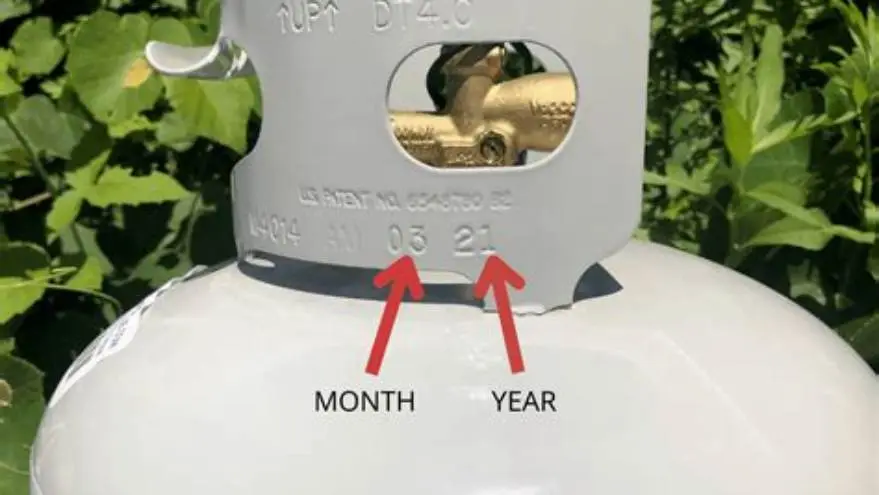
The commonly applicable first interval is 12 years from the marked date for applicable DOT cylinders. Cylinder type, service, and marking can change the requirement. Check the cylinder marking and current DOT rule before relying on a date.
Later intervals depend on the method used and the applicable rules. Some cylinders leave service instead. A supplier or qualified cylinder professional can confirm whether a cylinder is acceptable for filling.
The letter or code after a requalification date can indicate the method used. The permitted interval depends on that method and the applicable DOT rule; ask a qualified requalifier or supplier to read your cylinder marking.
For an exchange, inspect the replacement before connecting it. Look for damage, a usable valve, and clear markings. For a refill, expect the station to reject a cylinder with unreadable markings, damage, or an unacceptable date.
This choice is practical. Exchange can avoid arranging requalification for your own cylinder. Refill can cost less when your cylinder remains accepted and local refill pricing is lower.
- Exchange may avoid arranging requalification for your surrendered cylinder.
- Refill keeps your cylinder only while it remains accepted for filling.
- Ask a qualified requalifier or supplier to interpret unclear markings.
Who should choose exchange and who should refill?
Exchange suits occasional users who lack a practical refill station or value quick replacement. The convenience can justify a higher cost per delivered pound.
Refilling suits regular users with an accepted cylinder and a nearby station. You keep your cylinder and pay for the propane added. Compare the receipt with the exchange's delivered amount.
RV owners and users with mounted cylinders usually need refill service. A mounted cylinder cannot be treated like a portable exchange cylinder. Ask the supplier which service fits the installation.
A cylinder past its requalification date needs attention before refill. Use the cylinder marking and current requirements to decide what service is available.
Run the math on your own year. Say you burn through eight tanks a season. At the illustrative $0.58 saved per pound on refills, 15 lb each, that's about $70 a year. One or two tanks a season rarely pays back a special trip. The drive, the wait, and the gas both ways eat the gap. Convenience wins when you buy propane twice a summer.
| User type | Likely fit | Main reason |
|---|---|---|
| Occasional griller | Exchange or refill | Compare convenience with equal delivered amounts |
| Frequent user | Refill | Repeated use makes the delivered-pound rate matter |
| RV owner | Refill service | Mounted cylinders usually stay with the vehicle |
| User without a nearby refill station | Exchange | Travel time and transport can change the total cost |
| Cylinder needing requalification | Supplier guidance | The marking and current requirements determine eligibility |
What does cold weather tell you about a light cylinder?
Cold weather can reduce propane vaporization capacity. The result depends on cylinder size, liquid level, appliance demand, regulator condition, wind, and surrounding temperature. A high-demand appliance can show a weak flame while propane remains.
Don't use a temperature cutoff to diagnose the problem. Compare the cylinder's estimated contents and the appliance instructions first. Stop using the appliance if the cause remains unclear.
Keep the cylinder outdoors, upright, and away from ignition sources. Never bring it indoors or heat it with a heater, flame, hot water, or another artificial method.
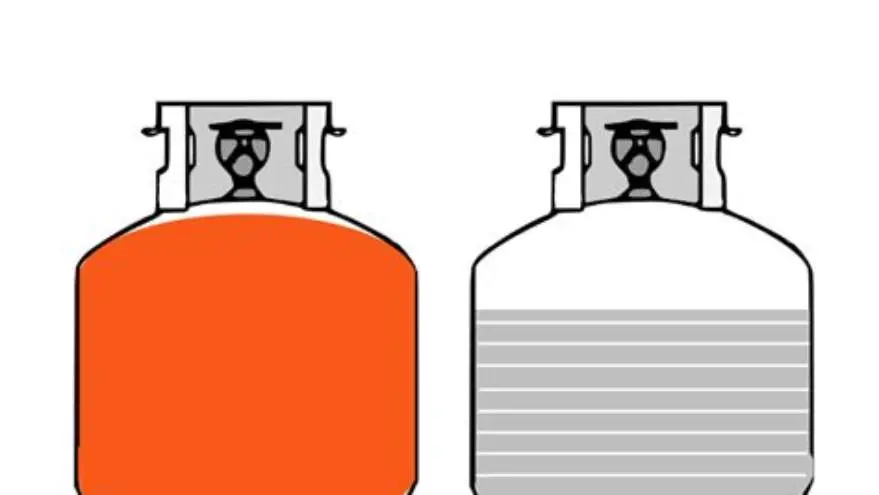
A number helps here. Propane boils at about -44°F, so it keeps making vapor well below freezing. The limit is surface area, not the cold alone. A near-empty 20 lb tank has little liquid left to vaporize, so the draw stalls on a cold night. Look for the frost line on the tank wall after a hard run. Frost high up means plenty of liquid inside. Frost near the base means it's nearly spent.
Choose exchange for convenience when its delivered-pound cost and location work for you. Choose refill when the total charge for the required propane amount is lower and your cylinder is accepted.
Key points
- Compare equal delivered propane amounts. A full refill and a smaller exchange are not equivalent offers.
- Refill pricing may use gallons or pounds. Your receipt should identify the quantity charged.
- Use this break-even rule: exchange price is cheaper when it costs less than the refill cost for the same delivered propane amount.
- The 80% rule leaves space for liquid propane expansion. It does not assign one universal fill amount to every cylinder.
- Keep cylinders outdoors, upright, and away from ignition sources. Never bring one indoors or heat it artificially.
- The commonly applicable first DOT requalification interval is 12 years for applicable cylinders. Check the cylinder marking and current requirements.
People also ask
Can I refill a partly full cylinder?
Many refill stations can add propane to an accepted partly full cylinder. Ask how the station bills the pounds added, whether it has a minimum charge, and whether other fees apply. The attendant must use the approved filling procedure.
How do I find a propane refill station near me?
Search for local propane refill service, then call ahead. Ask whether the supplier fills portable cylinders, which markings it accepts, and whether it bills by pounds or gallons.
My exchange cylinder smells of propane. Is that normal?
Treat any persistent or strong propane odor as a possible leak. Move away from ignition sources, don't operate switches near the cylinder, and stop using it. Contact the supplier or emergency services as appropriate. Don't bring the cylinder indoors.
Does an exchange cylinder always contain 15 lb?
No. Exchange programs can supply different net contents. Read the replacement cylinder's marking and use that amount in your cost calculation.
What happens if the replacement cylinder is older than mine?
Age alone doesn't determine suitability. Check the replacement's marking, valve, collar, and visible condition. Don't connect a damaged or questionable cylinder; ask the exchange operator for help.
Is a refilled cylinder safer than an exchange cylinder?
Neither option is automatically safer. Safety depends on an accepted, undamaged cylinder, correct filling, proper storage, and a compatible appliance. Follow the manufacturer's instructions and use qualified service when needed.