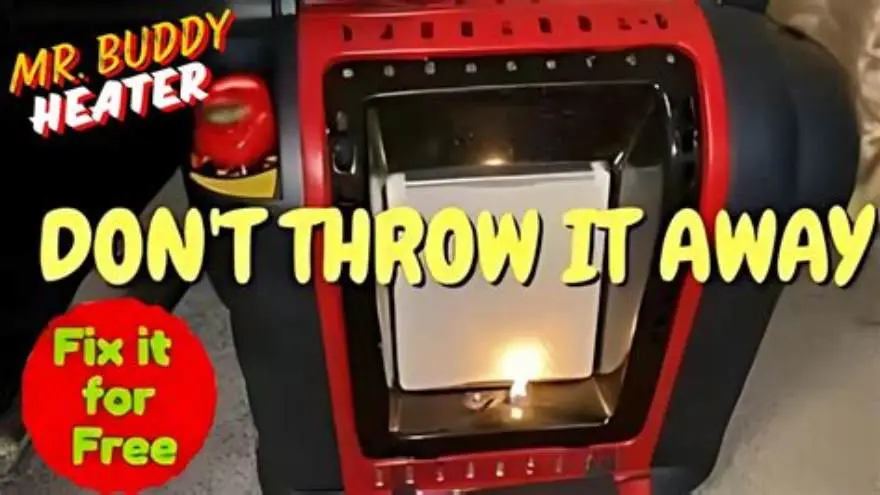
Propane heater indoors: which label wording rules a model out
It depends on the heater. Only a propane heater whose label and manual say it is approved for indoor use can go inside, and then only with the ventilation the manual states. Tank-top, torpedo and patio heaters are outdoor or worksite only.
Part of the guide: Propane garage heater size: adjust BTU for ceiling and insulation
Propane Facts
- Label checks
- 3: rating plate, manual, box
- Room volume check
- Some codes use 50 cu ft per 1,000 BTU/h; check your manual
- 20 lb cylinder
- About 4.7 gal; restricted indoors by most fire codes
- Indoor cylinder use
- Only if appliance instructions and local code allow it
- ODS trip point
- Varies by listed appliance; set at the maker's safe range
- Propane alarm placement
- Per listing, manual and local code; often low, near the floor
Contents8 sections
- Can propane heaters be used indoors? Start with the label
- Which propane heater types are meant for indoors?
- What do the oxygen depletion sensor and tip-over switch really do?
- How much ventilation does a garage, tent, RV or small room need?
- Why do some states and towns restrict vent-free heaters?
- Which detectors does the setup need, and where do they go?
- Key points
- People also ask
Can propane heaters be used indoors? Start with the label
Three places settle this, and you can check them all in about two minutes. The rating plate is a sticker or stamped tag, usually on the back or base. It lists the model, the gas type and the input in BTU/h (British thermal units per hour, the heat the burner uses). The manual's warnings page and the printed box usually repeat the use statement.
Listing marks give a second clue. Look near the model number for a logo from a safety lab such as CSA, UL or Intertek (ETL). A mark shows the heater was tested to a standard. It does not by itself establish indoor suitability. The specific listing and the manufacturer's instructions tell you which rooms, if any, the heater may go in. Patio heaters carry marks too.
Old or unmarked heaters are the hard case. A faded plate, a lost manual or a garage-sale find gives you nothing to go on, and shape tells you little. Two similar-looking radiant heaters can have different approvals. Work through these steps and stop at the first written answer.
- Photograph the model and serial number on the rating plate, even if it's half worn.
- Search the maker's website for that model. Read the manual's warnings page for the words indoor, vent-free or outdoor.
- Contact the maker's customer service and ask in writing: is this model approved for indoor use, and in which rooms?
- Keep the heater outdoors, in open air, until you hold a written yes.
- If the brand is gone or nobody can identify the model, retire it from indoor use for good.
| Wording you find | What it means |
|---|---|
| Approved for indoor use, with ventilation instructions | Tested for rooms. Follow the manual's room-size and air rules. |
| Vent-free or unvented, with a listing mark | Indoor-rated with an oxygen sensor. Local rules vary. |
| Direct vent or sealed combustion | Indoor-rated. Exhaust runs outside through a pipe. |
| For outdoor use only | Never indoors, including garages and tents. |
| Well-ventilated areas, jobsites, temporary heat | Worksite heater, not a home heater. |
Which propane heater types are meant for indoors?
Propane heaters come in several forms. Each type has a different indoor status, so identify the design before judging the label. For the detail, see our notes on why the pilot goes out at release.
A portable indoor-rated heater is usually a small radiant unit. It might use a 1 lb cylinder. Its manual must approve indoor use, room size, and ventilation conditions. Follow every limit. A general claim such as “safe for camping” does not approve bedroom use. Check the model number against the manual, too.
Vent-free fixed heaters mount to a wall or sit on the floor. They take combustion air from the room and release combustion products into that room. An oxygen depletion sensor and a listing mark support indoor approval, but they don't override local rules. Some places restrict these heaters in bedrooms, bathrooms, or entire homes.
Direct-vent heaters use a sealed pipe system. They draw combustion air from outside and send exhaust outdoors through the same installation. A qualified installer usually handles the wall opening, clearances, and gas connection. These heaters don't use the room's air for combustion.
Construction or torpedo heaters force large amounts of warm air through an open burner. They suit open jobsites with continuous fresh air. They don't belong in living areas, garages, tents, or other enclosed spaces. Tank-top radiant heaters have the same problem, even when they look small.
Cylinder size matters, but it doesn't replace the appliance's indoor-use listing. Don't bring a cylinder indoors unless the appliance instructions and local fire or fuel-gas rules specifically allow it. Check both sources before moving the heater or cylinder inside.
| Type | Indoor status | Where it belongs |
|---|---|---|
| Vent-free wall or cabinet heater with oxygen sensor | Indoor only if listed; local code may restrict it | Living areas, unless local rules bar specific rooms |
| Direct-vent heater | Indoor-rated when installed as specified | Rooms with the required venting, clearances, and gas connection |
Small portable radiant heater on a 1 lb cylinder | Indoor only if its manual says so | Ventilated rooms within the manual's size limits |
Tank-top radiant heater on a 20 lb cylinder | Outdoor or worksite use only | Open air, never a home, garage, or tent |
| Forced-air torpedo heater | Ventilated worksite use only | Open jobsites with continuous fresh air |
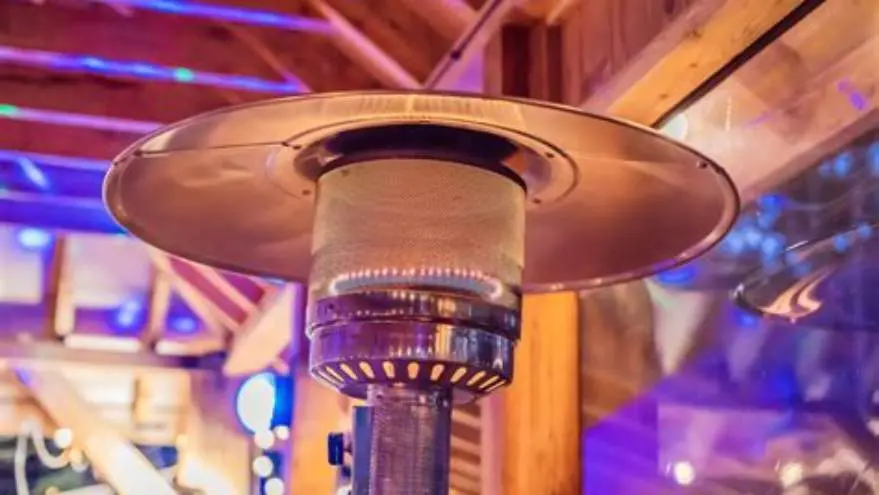
| Patio heater | Outdoor use only | Open patios with required overhead clearance |
What do the oxygen depletion sensor and tip-over switch really do?
The oxygen depletion sensor, or ODS, sits beside the pilot flame. It shuts off the burner when oxygen drops below the appliance’s specified range. The exact threshold depends on the listed heater and its safety design. An ODS helps prevent poor burning in a sealed room. It’s a backup, not permission to close the room.
Tip-over protection uses a weighted valve or switch. It cuts the gas when the heater tilts beyond its set angle. A heater can remain upright while a curtain blocks its grille. The switch won’t detect that obstruction. It also doesn’t check the hose, regulator or cylinder for leaks.
Both devices can work correctly while a heater remains unsafe in a closed space. Neither sensor detects carbon monoxide or escaping gas. A dirty burner can produce carbon monoxide while oxygen stays near normal. These controls support a heater already approved for indoor use. They don’t make an outdoor heater suitable for indoor burning.
Stop using the heater if its body, hose, regulator or cylinder shows damage. Repeated shutdowns can signal a dirty pilot, poor combustion air or low fuel pressure. Drafts and failed parts can cause the same symptom. Treat repeated shutdowns as a fault, not a feature. Keep the heater out of service until the cause is identified and repaired by a qualified technician.
How much ventilation does a garage, tent, RV or small room need?
Start with room volume. Some fuel-gas rules define an unconfined space as at least 50 cubic feet per 1,000 BTU/h of total appliance input. That is not a universal ventilation rule; use the heater manual and local code. The 50-per-1,000 figure comes from fuel-gas codes as a space-classification threshold, not a standalone ventilation formula. Your manual's ventilation requirement is the number that governs your setup.
Take a 20,000 BTU/h heater in a 10 ft by 12 ft room with an 8 ft ceiling. The space-classification check: 20 × 50 = 1,000 cubic feet needed; 10 × 12 × 8 = 960 cubic feet available. The room may be classified as confined. That means your manual's ventilation opening requirements kick in, not that the heater is unusable. A 10,000 BTU/h model needs only 500 cubic feet by the same check.
Heat output is a separate question. The Heater BTU Calculator on this site gives the BTU/h your space needs. Then check how each space type changes the rules:
- Garage: an indoor listing doesn't mean garage-rated. Gasoline vapor pools low and a burner can ignite it. Use a heater only if the manual names garages as an approved location.
- Tent: do not use a heater in a tent unless that exact model's manual expressly permits it and specifies the required clearances and ventilation. Never run any heater while you sleep.
- RV: the built-in furnace vents outside; a portable heater doesn't. A 20 ft trailer 7 ft wide with a 6.5 ft ceiling is only about 910 cubic feet. Check whether a portable heater is approved for the RV's space and power system.
- Small room: bathrooms and bedrooms are where codes restrict heaters first. Do not use an unvented propane heater as a substitute for a required furnace or as the sole heat source in a room where a vented appliance is mandated.
Why do some states and towns restrict vent-free heaters?
A vent-free heater releases its exhaust into the room you're sitting in. That exhaust is mostly carbon dioxide and water vapor, with small amounts of carbon monoxide and nitrogen dioxide. Regulators worry that dirty burners, small rooms and tightly sealed homes turn small amounts into a problem.
Opinion splits here. Makers say listed models are tested to emission limits and shut off on low oxygen. Critics, including some code officials, point to moisture, mold in tight homes and burners nobody cleans. What binds you is the rule where you live.
Restrictions usually hit bedrooms and bathrooms first. Some places ban unvented heaters in homes outright. Check local code rather than trusting a state list online, because cities and counties adopt model codes differently. Landlords, HOAs and insurers can add their own rules.
- Call your city or county building department.
- Ask: are unvented gas room heaters allowed in homes here, and in bedrooms or bathrooms?
- Read your lease or HOA rules if either applies.
- Get the answer in writing, and hire a licensed technician for any fixed gas connection.
Which detectors does the setup need, and where do they go?
You need two kinds of alarm, and they are not interchangeable. A carbon monoxide alarm senses CO, the odorless gas that forms when any fuel burns without enough air. A combustible-gas alarm senses raw propane vapor. A CO alarm cannot detect a propane leak with no flame. A propane alarm cannot detect CO. They measure different hazards and mount in different places.
Propane vapor is about 1.5 times heavier than air, so a leak pools near the floor. Install an LP-gas alarm exactly where its listing, installation manual and local code specify. Many products call for low placement because propane vapor can collect near the floor. Keep it clear of furniture and away from door and window drafts.
CO mixes through the room, so height matters less for that alarm. Put a CO alarm on every level and outside sleeping areas, plus one in the heater's room at the distance its manual gives. Flip each alarm over and read its replace-by date, since CO sensors wear out on a schedule the maker publishes.
A listed combination LP-gas and CO alarm can monitor both hazards, provided it is approved for the installation and placed according to its instructions. For an RV, choose an alarm approved for the vehicle's power system and installation conditions.
Test alarms at the interval specified by their manufacturers. Many products call for monthly testing. Write each replace-by date on a sticky note inside the cabinet where you keep it.
Key points
- Read the rating plate, the manual's warnings page and the box. If none of them says indoor, the heater isn't approved for indoors.
- Safety sensors don't convert an outdoor heater into an indoor one.
- Some fuel-gas rules define an unconfined space as at least 50 cubic feet per 1,000 BTU/h of total appliance input. That is not a universal ventilation rule; use the heater manual and local code.
- Call your building department before installing a vent-free heater. Local rules can ban it or limit it to certain rooms.
- Pair any indoor heater with a CO alarm and a propane alarm. Test each at the interval its manufacturer specifies.
People also ask
Can I use a heater labeled indoor-safe in a tent?
Do not use a heater in a tent unless that exact model's manual expressly permits it and specifies the required clearances and ventilation. Indoor-safe usually means a ventilated room. Never run any heater while you sleep.
Can I keep a spare 20 lb cylinder in the garage or basement?
Rules commonly restrict storage and use of larger cylinders inside occupied buildings. Check the adopted fire code and the appliance instructions before bringing one indoors. Ask your local fire department about attached garages and sheds, since local rules differ.
Does a CO alarm also catch a propane leak?
No. A CO alarm senses carbon monoxide from incomplete burning. A propane leak with no flame produces none. You need a separate propane, or LP-gas, alarm too. Place each one where its listing, manual and local code direct.
My indoor-rated heater keeps shutting off. Is the oxygen sensor faulty?
Possible causes include a dirty pilot, inadequate combustion air, low fuel pressure, drafts or a component fault. Follow the manual and have a qualified technician diagnose repeated shutdowns. Never bypass the sensor.